
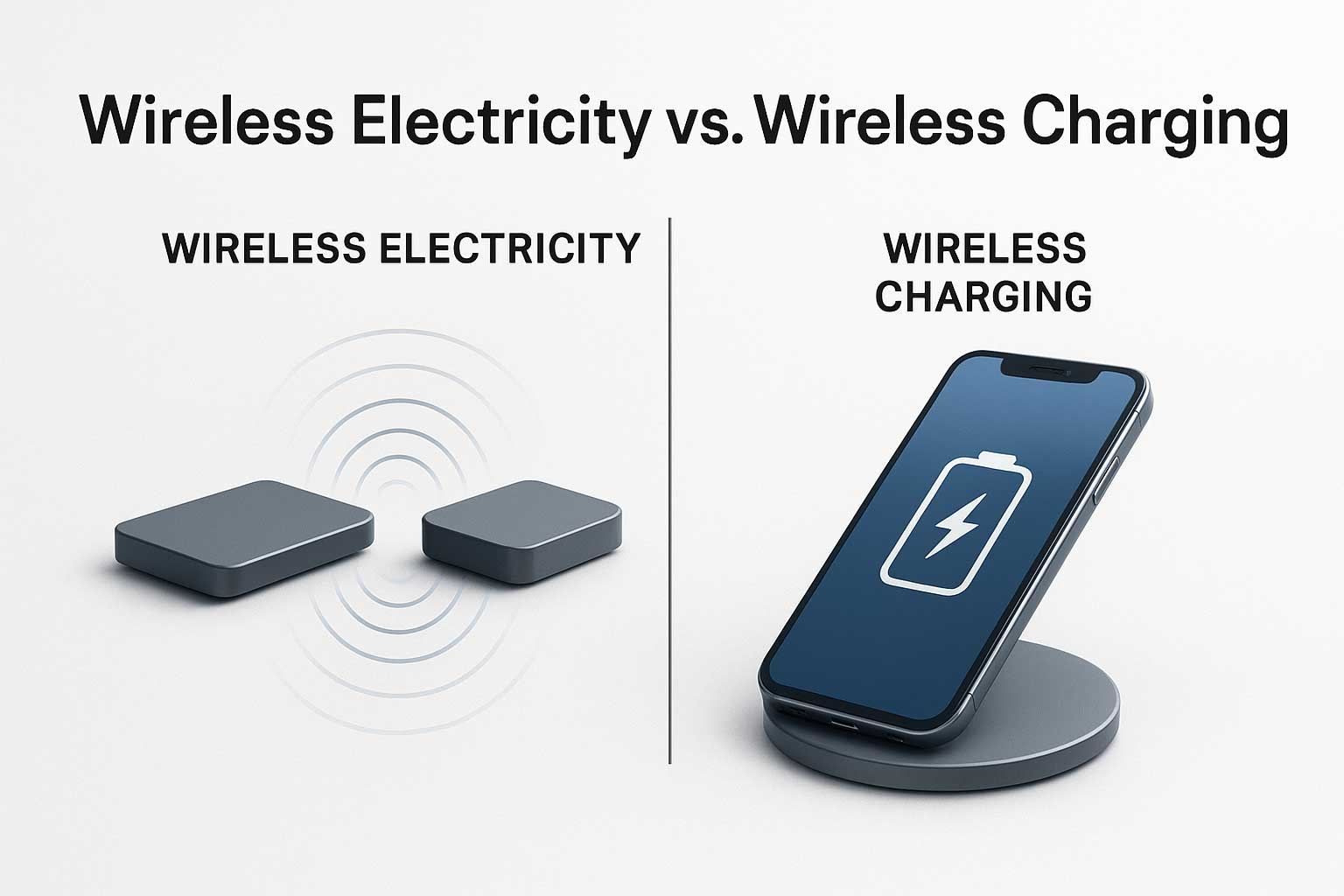
Wireless Electricity vs Wireless Charging: What’s the Difference?
The terms “wireless electricity” and “wireless charging” are often used as if they mean the same thing, but they describe two very different ideas. One is a broad scientific field exploring how power can move without a cable. The other is a set of practical, short-range technologies built into consumer devices. Understanding the difference helps make sense of where the industry is today — and where it may be headed.
Wireless Charging: A Convenience Technology
Most people’s first experience with wire-free power comes from setting a phone on a charging pad. This is wireless charging in its simplest and most familiar form. The idea is straightforward: transfer power across a few millimetres using magnetic fields.
Wireless charging works well for:
- smartphones
- earbuds
- electric toothbrushes
- small consumer devices
The range is extremely short, the alignment must be precise and the power levels are modest. It’s a convenience feature — not a new form of electricity delivery.
Wireless Electricity: A Much Bigger Concept
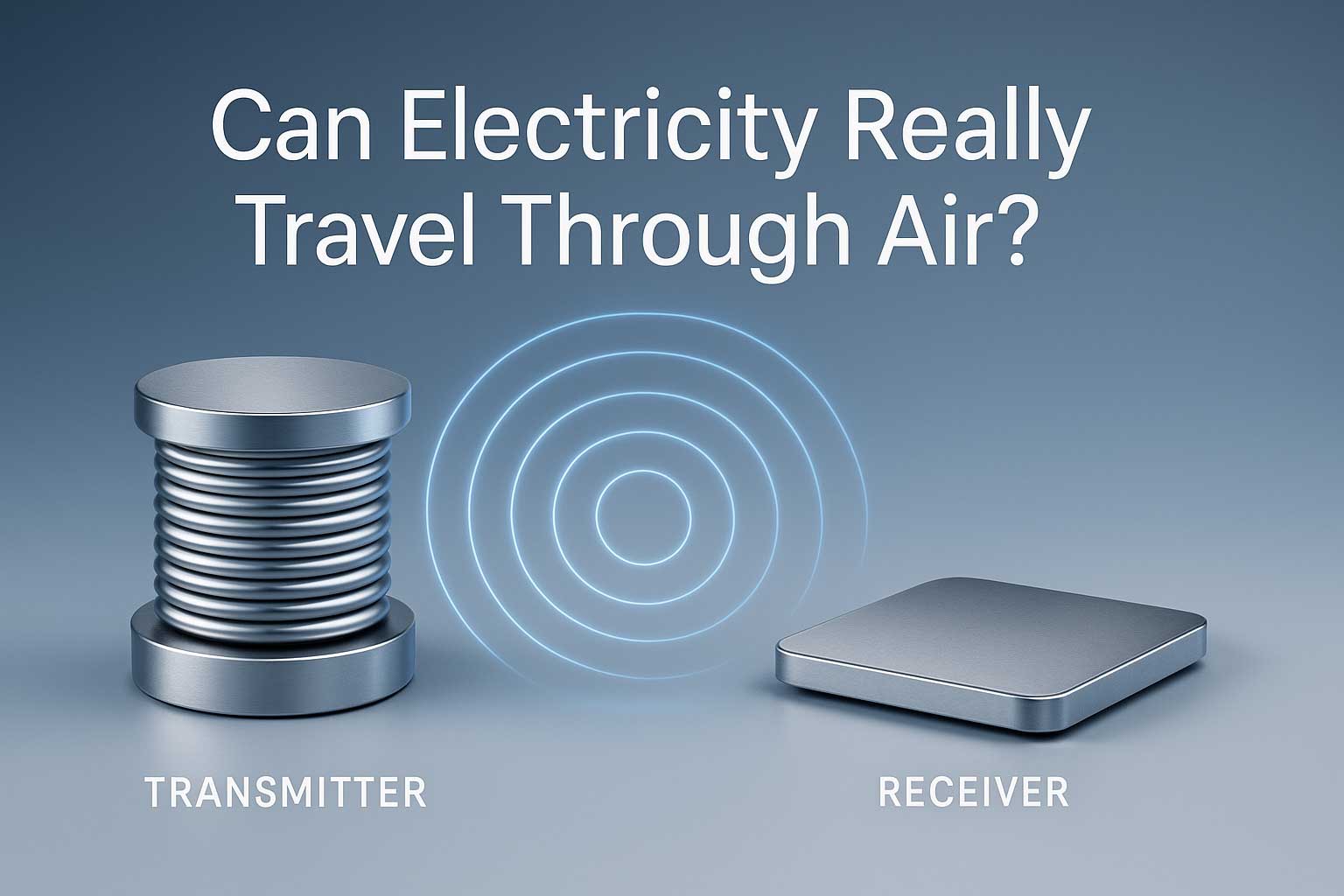
Wireless electricity is the larger category. It includes any method that moves energy without using a traditional wire. That can mean magnetism, radio waves, light, sound or other experimental approaches. Wireless charging is simply one small branch of this larger field.
Wireless electricity includes:
- near-field magnetic transfer (charging pads)
- resonant magnetic systems (mid-range)
- radio-frequency power delivery
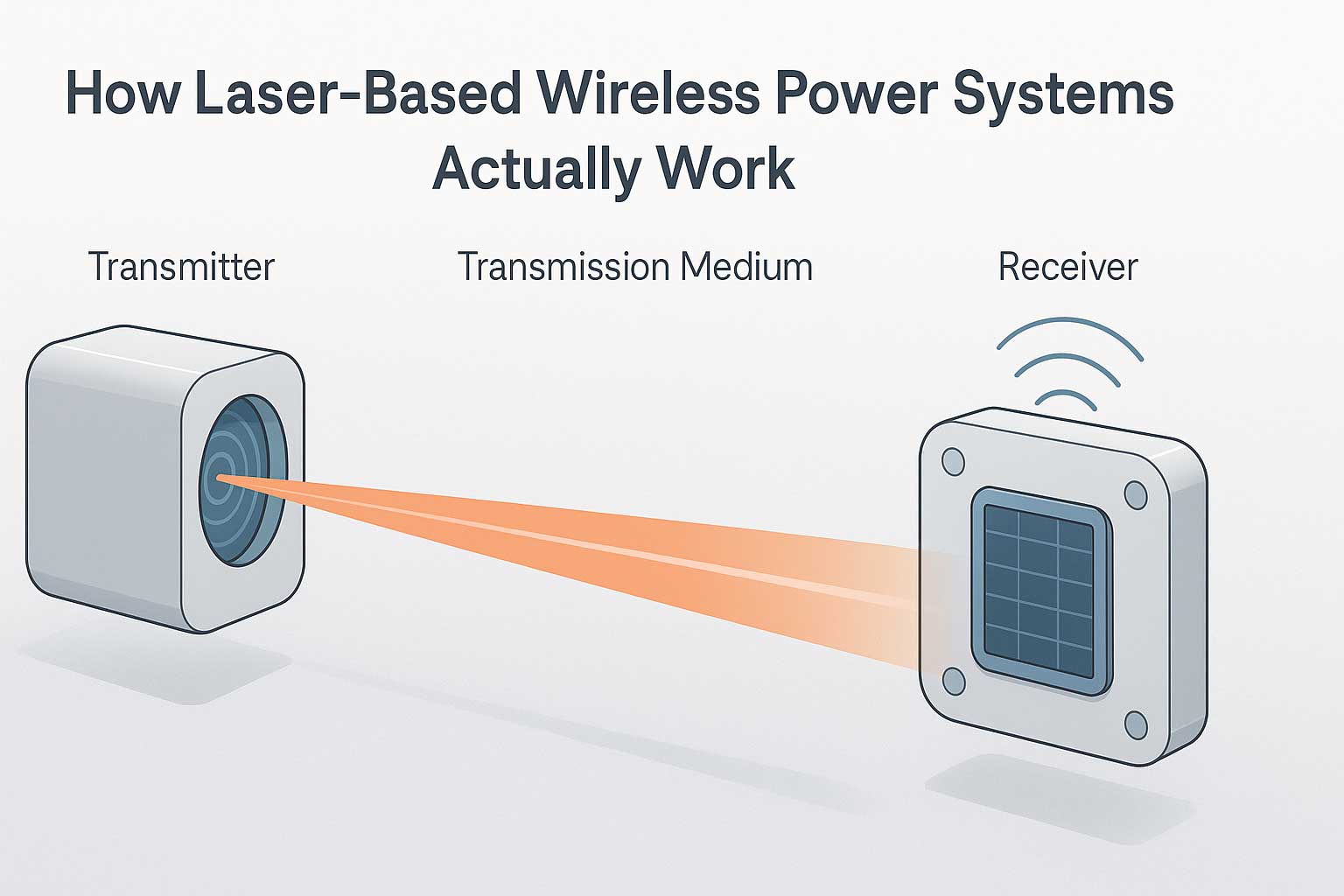
- laser-based power-by-light systems
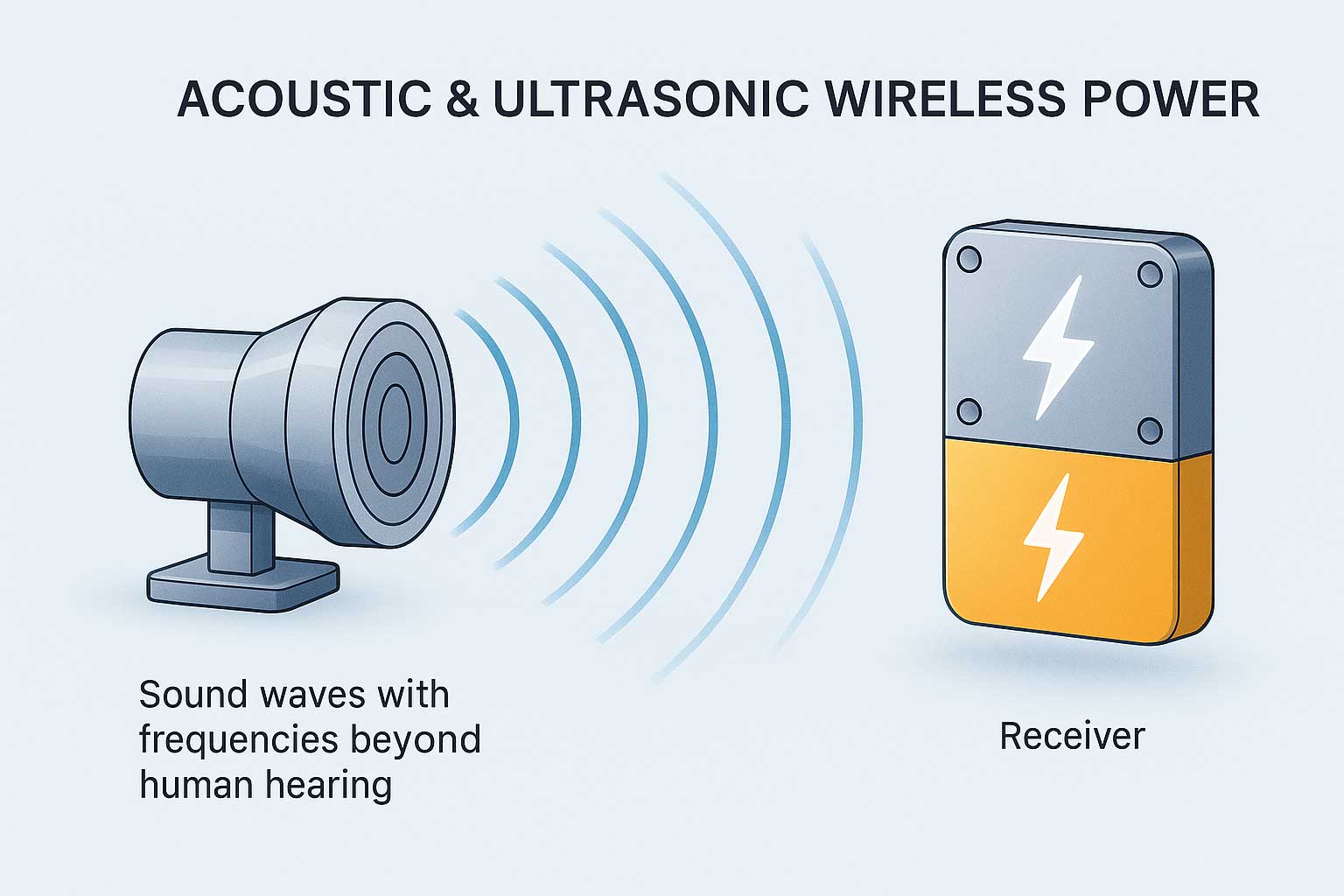
- acoustic and ultrasonic power transfer
- experimental guided-discharge systems
Each method has its own strengths, weaknesses and ideal applications. Some deliver only microwatts; others can deliver meaningful power across long distances with tight control.
The Key Difference: Range and Purpose
Wireless charging exists to replace a cable for everyday devices. Wireless electricity exists to explore new ways of moving power in situations where cables are impossible, unsafe or impractical.
A simple way to think about it:
- Wireless charging is a product feature.
- Wireless electricity is a scientific and engineering field.
One solves a convenience problem. The other solves engineering problems in industry, robotics, medical technology and long-term infrastructure.
Power Levels Show the Difference Clearly
Wireless charging is designed around consumer-safe power levels. It rarely exceeds a few tens of watts, and always over very short distances.
Wireless electricity, depending on the method, can deliver:
- microwatts (RF power)
- millwatts (ambient harvesting)
- several watts (laser links)
- tens of watts (resonant magnetic systems)
The variety reflects the broader purpose: different tools for different problems.
Do They Compete With Each Other?
Not really. Wireless charging will continue to serve everyday devices. Wireless electricity will keep expanding into areas where wires make design harder, not easier.
For example:
- RF systems keep sensors running without batteries.
- Laser systems deliver power into sealed or hazardous environments.
- Magnetic resonance helps robots recharge without docking connectors.
- Acoustic systems power implants where wires cannot go.
Each technology fills its own niche. None replaces the others.
Why the Distinction Matters
When people hear “wireless electricity,” many assume it refers to charging a phone from across the room. That misunderstanding leads to unrealistic expectations and a lot of media confusion. Clear terminology makes it easier to follow real scientific progress and avoid mixing consumer products with research technologies.
Wireless charging is already part of everyday life. Wireless electricity is the ongoing effort to push the boundaries far beyond that.
The Bottom Line
Wireless charging is a narrow, practical application of one method of wireless electricity. Wireless electricity itself is a broad collection of technologies, each using different physical principles to move energy through air, light or vibration. They aren’t the same thing, and they aren’t competing. One is a convenience feature; the other is a long-term shift in how energy can travel.

Leave A Comment