
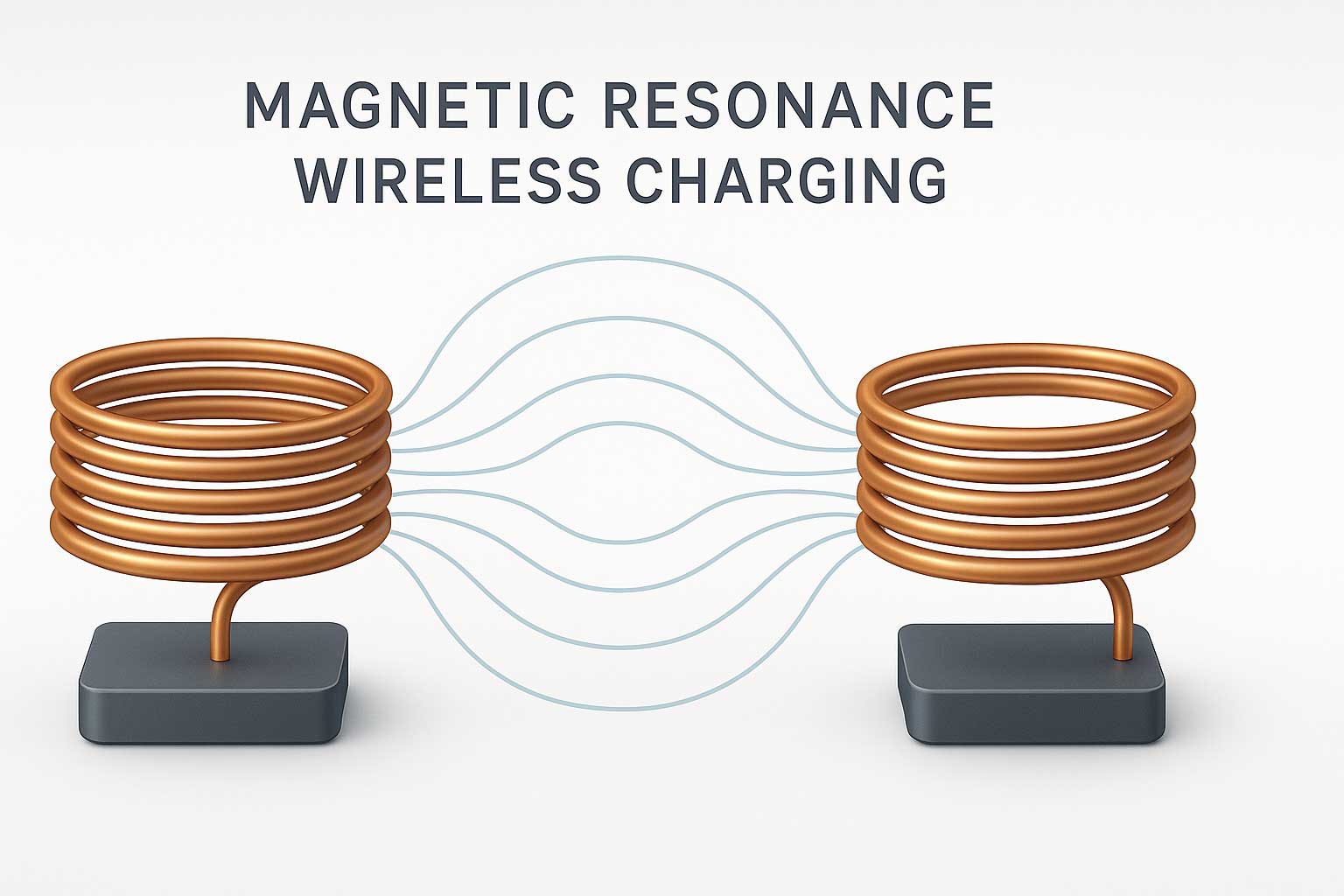
How Magnetic Resonance Wireless Charging Works
Magnetic resonance is one of the most practical and widely researched approaches to wireless electricity. Unlike long-range concepts that rely on lasers or radio, magnetic resonance focuses on efficient, short-to-mid-range energy transfer using well-controlled electromagnetic fields. It’s the method behind many modern wireless charging systems, and it’s steadily becoming more capable as the engineering improves.
What makes magnetic resonance interesting is the balance it strikes: it doesn’t promise extreme range, but it does offer reliable power delivery with fewer positioning limitations. For everyday devices and industrial equipment, that balance matters more than dramatic claims.
The Basic Idea Behind Magnetic Resonance
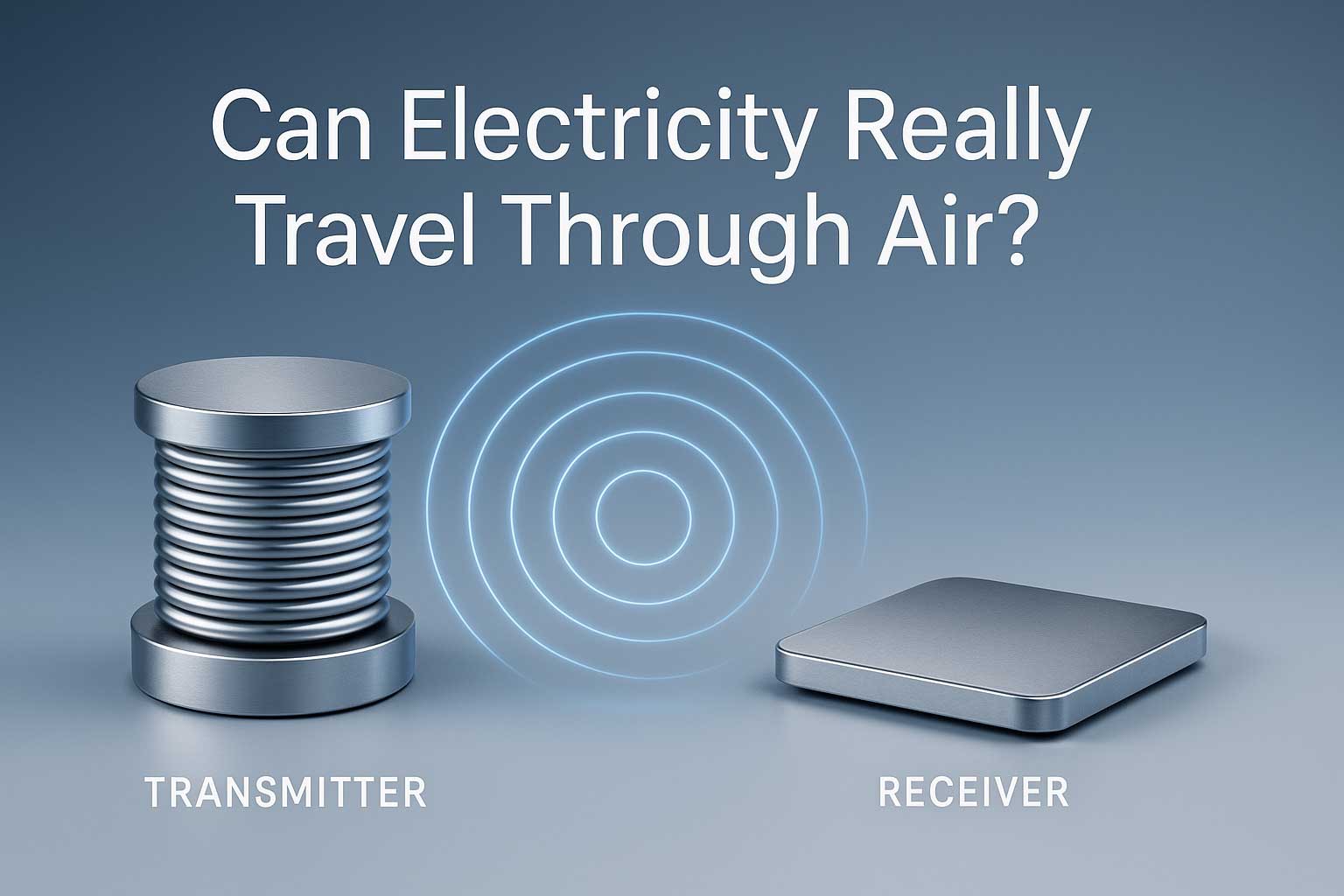
At the heart of the system are two coils — a transmitter and a receiver. When the transmitter coil oscillates at a specific frequency, it creates a magnetic field that shares the same resonant frequency. The receiving coil, tuned to match, picks up that field and converts it back into electrical energy.
This “frequency matching” is the key. Two coils that resonate together can transfer energy more effectively than coils that simply rely on induction alone. The result is a link that allows for more flexibility in distance and alignment.
How It Differs From Standard Inductive Charging
Traditional inductive charging — the kind used in many phone charging pads — requires very close contact. The device needs to be placed in almost the exact spot to receive power efficiently.
Magnetic resonance loosens those constraints. Because the coils share a resonant frequency, the energy coupling is stronger and more forgiving. A device can be a short distance away, slightly misaligned or even move within a small area, and still receive power.
What the System Looks Like in Practice
A typical setup includes a power electronics module, a resonant transmitter coil and a receiving module inside the device being powered. When the system activates, the transmitter creates a stable oscillating field. The device doesn’t need perfect contact — it simply needs to be within the field’s effective region.
Engineers tune coil shapes, frequencies and materials to improve performance. The best designs minimise losses and maintain stable energy transfer even if the receiver shifts or rotates slightly.
Where Magnetic Resonance Is Being Used
This method is already present in consumer electronics, robotics and industrial systems. It’s being explored for:
- Charging household electronics without precise placement
- Powering warehouse robots or autonomous carts
- Providing sealed power links for medical devices
- Embedded charging stations in desks, furniture or vehicles
The flexibility of the system makes it appealing anywhere cables introduce clutter, wear or mechanical constraints.
Efficiency and Limitations
Efficiency depends on coil design, tuning accuracy and the distance between the transmitter and receiver. In practical setups, magnetic resonance can deliver strong efficiency at short range, but it drops as the coils move farther apart. It’s not built for room-scale or long-distance transmission.
There are also safety limits on field strength, and engineers must ensure that nearby objects or components aren’t affected by the magnetic field. For controlled environments, however, these factors are well understood and manageable.
The Bottom Line
Magnetic resonance wireless charging is a practical, well-developed technology that expands what short-range wireless power can do. It offers more freedom than simple induction without trying to solve long-distance challenges. As materials improve and coil designs become more refined, its role in everyday electronics and light industrial systems will only grow.

Leave A Comment