
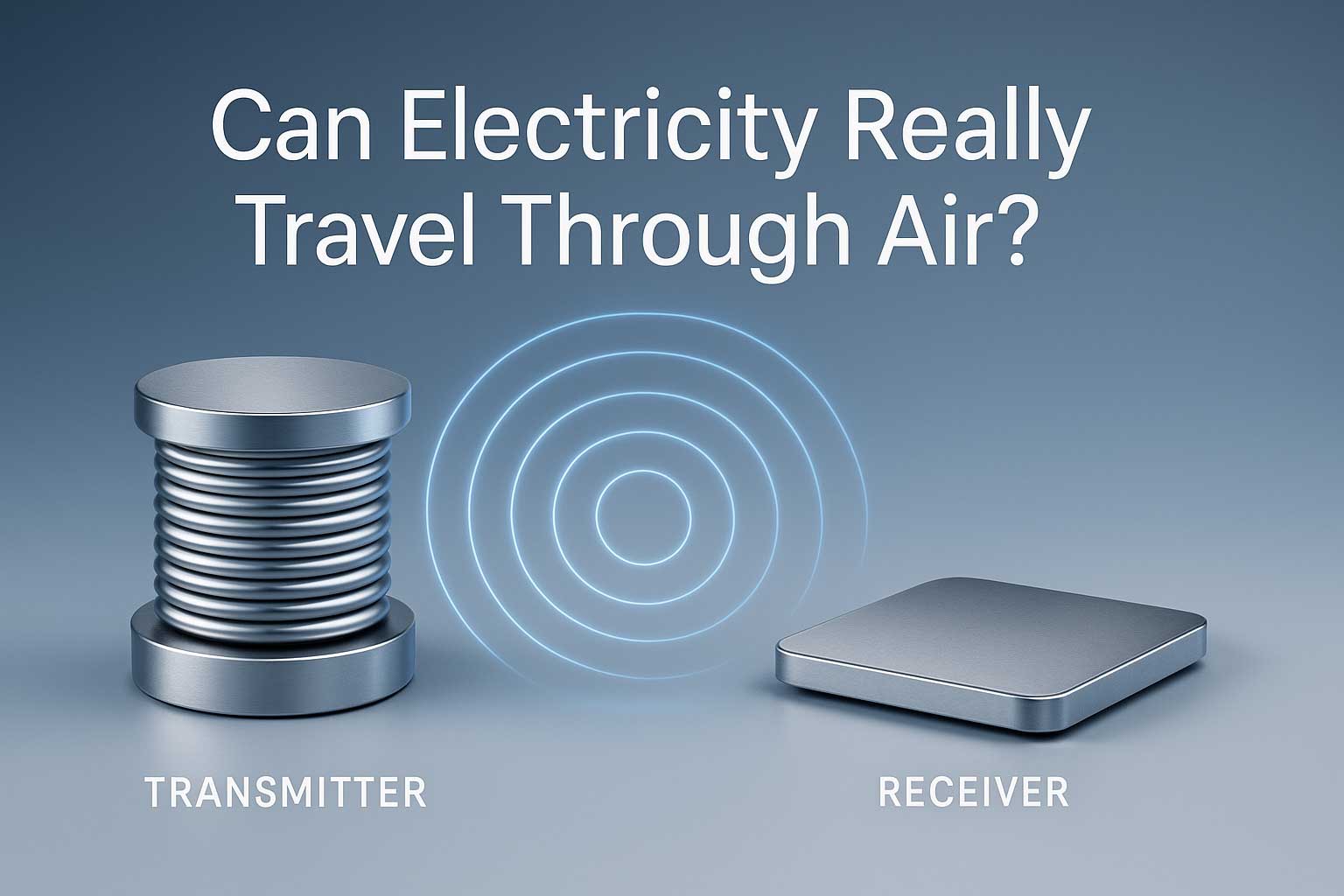
Can Electricity Really Travel Through Air? The Science Behind Airborne Power
The idea of electricity moving through air seems strange if you’re used to thinking of power as something that stays inside copper wires. Yet electricity has never been limited to metal. Under the right conditions, energy can cross air, space or even a vacuum. The question is not whether it can happen — but how it can happen safely and in a controlled, useful way.
Wireless power technologies approach this in different ways. Some rely on fields, some on waves, some on beams. All of them use physical principles that have been understood for decades, even if the engineering continues to improve. To understand how electricity can travel through air, it helps to look at the main methods and what makes each one work.
Electric Fields and Magnetic Fields Already Move Through Air
Electromagnetic fields don’t need a wire. When current flows through a conductor, a magnetic field forms around it. When voltage changes rapidly, an electric field appears. These fields exist in the air whether you notice them or not.
This is why:
- a transformer can transfer energy without the coils touching
- radio antennas can broadcast signals over long distances
- microwave ovens heat food using waves that cross air
In all of these cases, electricity is not travelling as electrons in the air — it is travelling as energy carried by fields and waves.
Method 1: Magnetic Coupling (Short Range, High Efficiency)
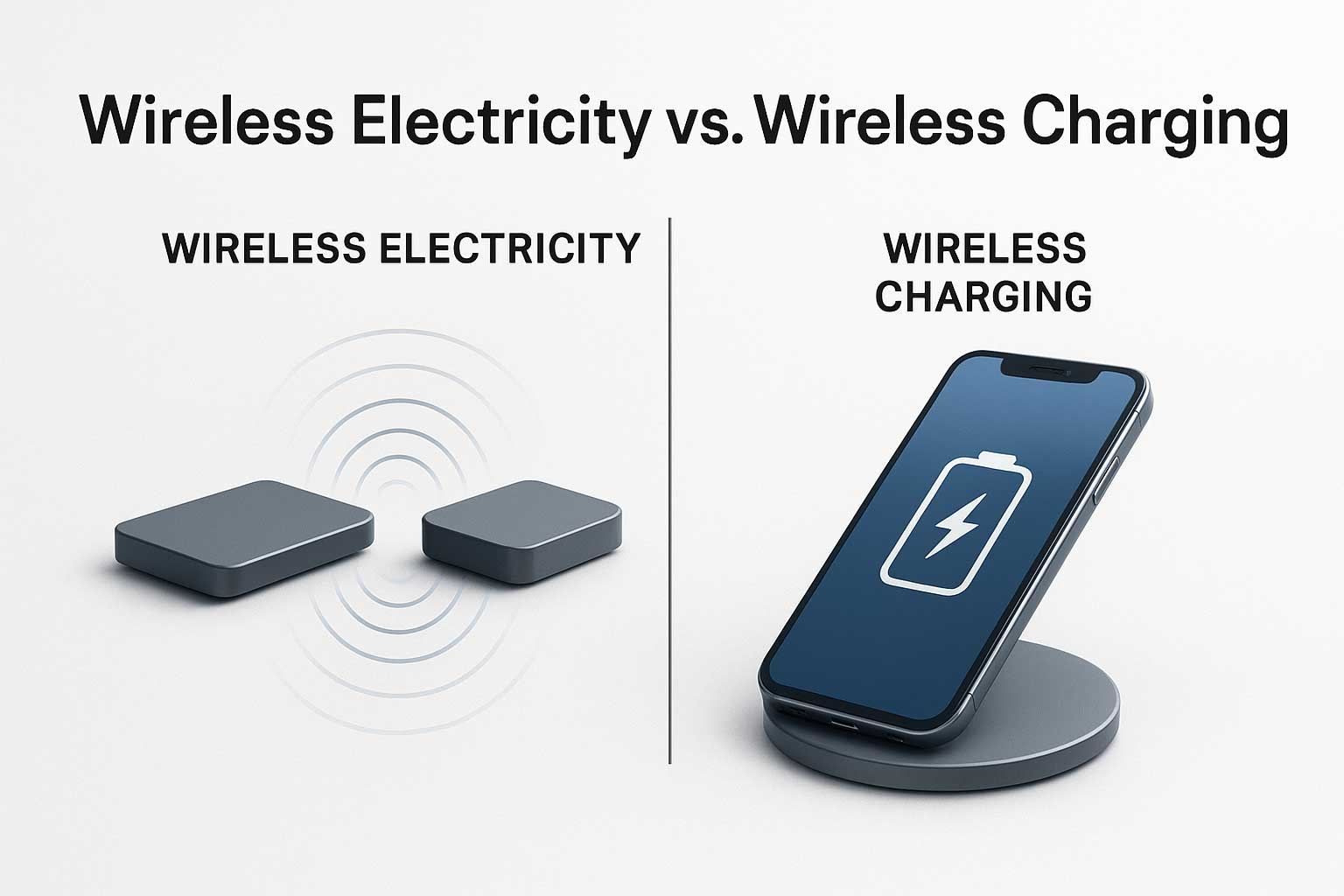
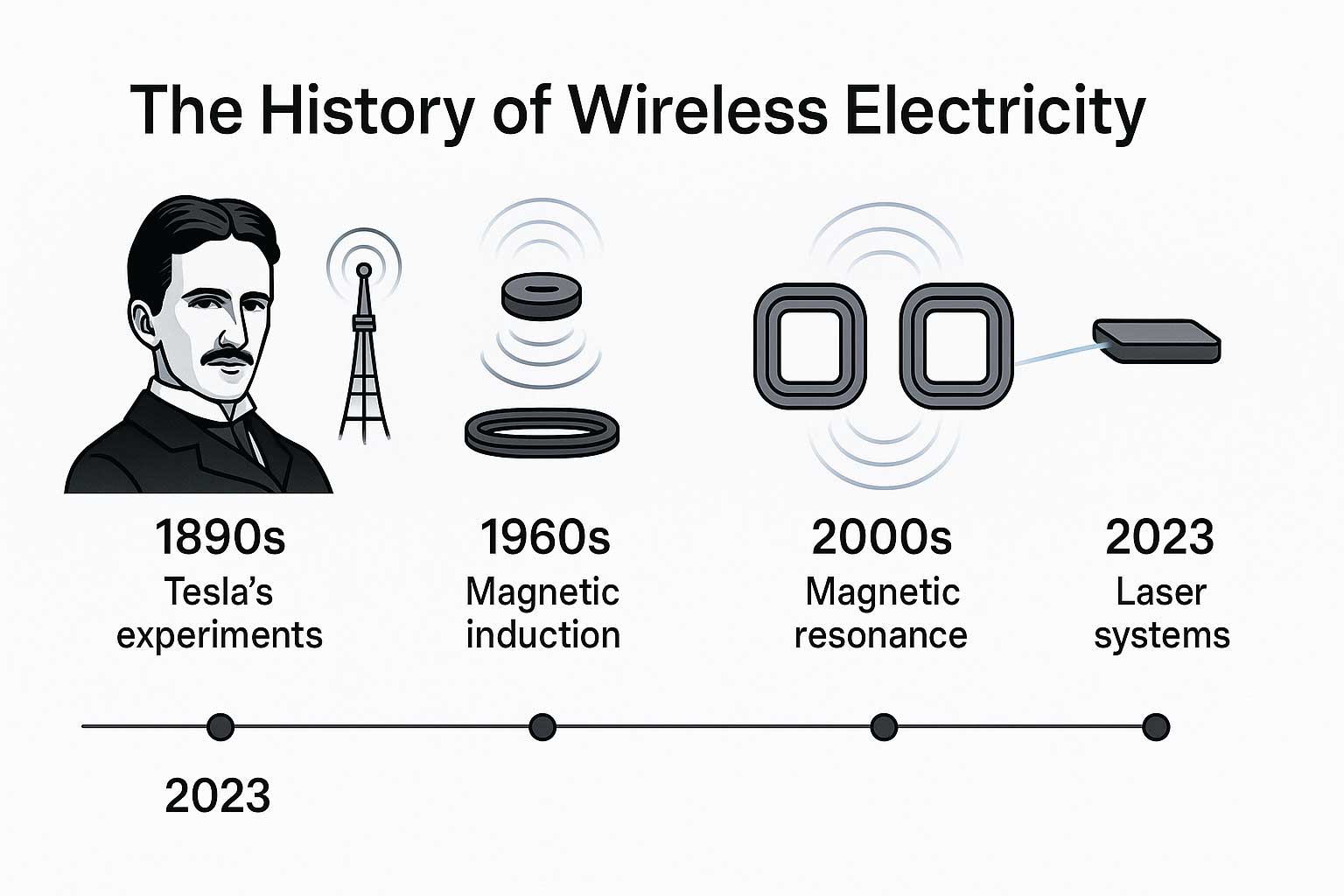
This is the method behind wireless charging pads. When a coil generates a changing magnetic field, that field can cross a small air gap and induce current in a second coil. The air is simply the space between them.
It’s clean, efficient and predictable — but the distance is small. A few millimetres of separation is enough to weaken the effect significantly.
Method 2: Resonant Magnetic Systems (Mid-Range)
By tuning coils so they resonate at the same frequency, engineers can stretch the range to several centimetres or even a bit more. The electricity isn’t jumping through the air as a spark — it’s moving as a magnetic field linking two tuned circuits.
Electric vehicles and warehouse robots sometimes rely on this approach for wireless docking.
Method 3: Radio Waves (Longer Distance, Low Power)
Radio waves have carried information through the air since the early 1900s. They can also carry power. When a transmitter emits RF energy, nearby antennas can collect a small portion and convert it into electricity.
This works well for:
- sensors
- tracking tags
- low-power IoT devices
The power level is small, but the freedom of placement is enormous.
Method 4: Light and Laser Beams (Line-of-Sight Power Delivery)
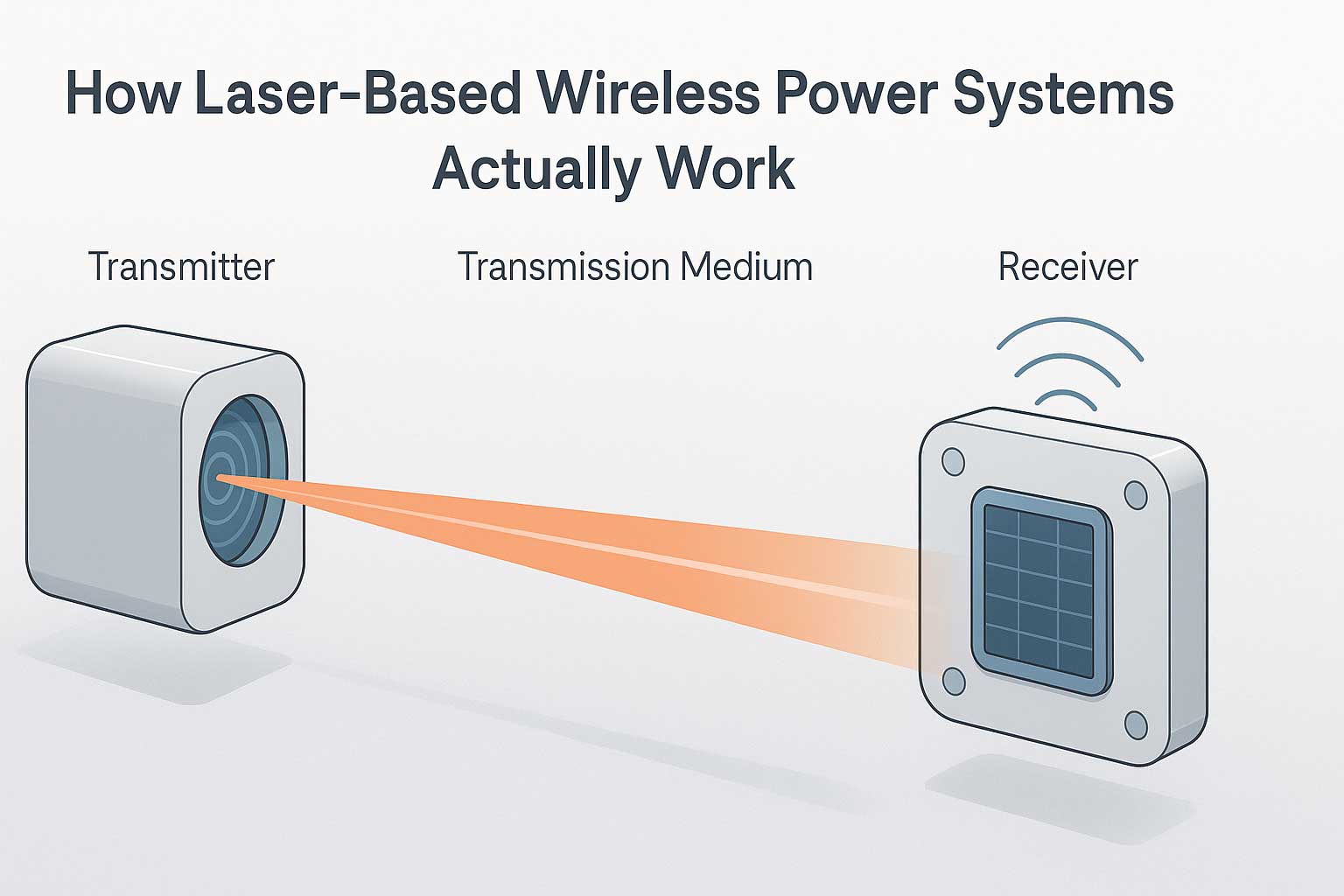
Light is energy. A laser focuses that energy so it can travel across air in a straight beam. A specialised photovoltaic receiver captures the beam and turns it back into electricity.
The electricity is not flowing through the air as charge — it’s being carried by photons until the moment it hits the receiver.
These systems are used in:
- industrial safety environments
- hazardous zones where wires are dangerous
- robotic platforms that require electrical isolation
The beam is monitored continuously and shuts off instantly if anything crosses the path.
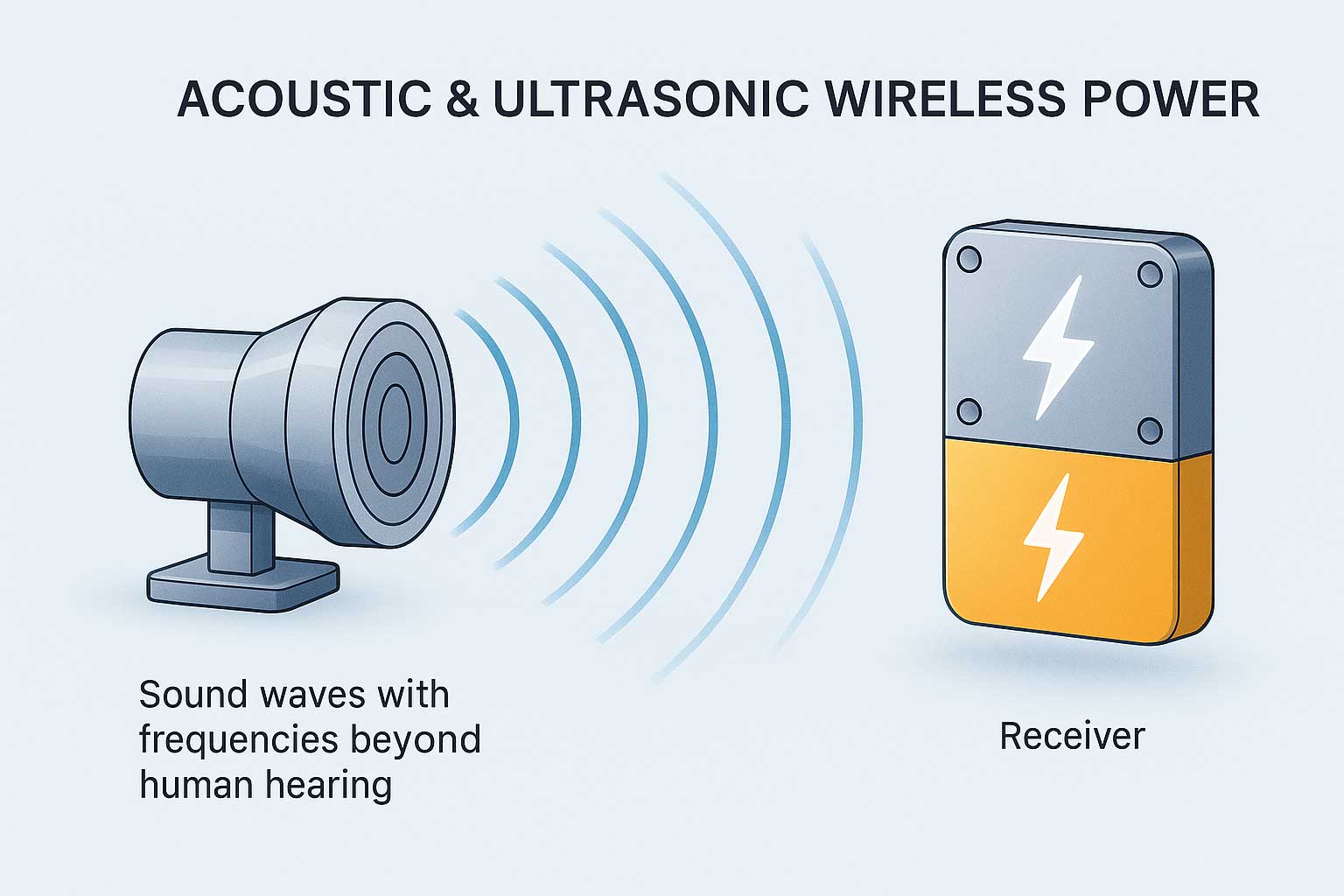
Method 5: Acoustic Energy (Vibration Through Air or Solid Material)
Ultrasonic systems use high-frequency sound waves to carry mechanical energy through air or a solid structure. A piezoelectric receiver converts those vibrations into electrical charge.
While still experimental, this approach proves that even pressure waves can deliver usable power over short distances.
What About Sparks or Lightning? Is That “Electricity in Air”?
Lightning is electricity moving through air — but it happens under extreme conditions. Air normally acts as an insulator. Only when voltage becomes incredibly high does it break down and allow electrons to jump across a gap.
No practical wireless power system uses this method. Controlled systems rely on fields and waves, not sparks.
The Real Question: Can Electricity Travel Safely Through Air?
Yes — when the method is designed properly. Wireless power follows strict limits for exposure, intensity and direction. Radio waves have mature safety standards. Laser systems include automatic shutoff. Magnetic systems operate at low frequencies that do not damage tissue.
Air is not a danger; it is simply the medium through which energy travels. The method determines the safety, not the distance.
The Bottom Line
Electricity can travel through air, but not as a loose stream of electrons. It moves as energy carried by fields, waves or light. Wireless power technologies take advantage of these natural behaviours to move electricity where wires cannot go.
Some methods work at centimetres. Others stretch across rooms. A few can reach even farther when the engineering is right. The concept isn’t magic — it’s physics applied with precision.

1kcwg4