
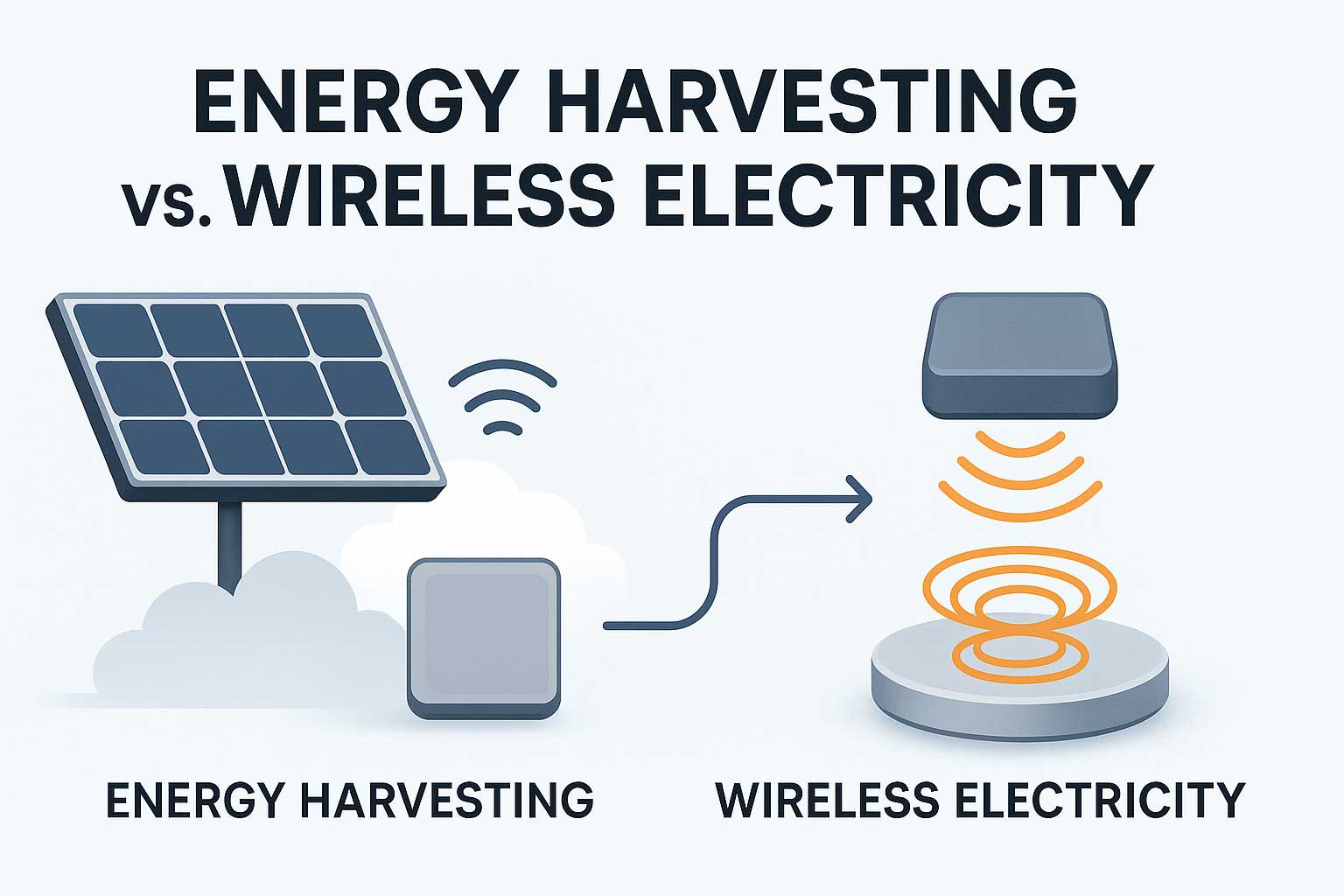
Energy Harvesting vs. Wireless Electricity: What’s the Difference?
Wireless electricity and energy harvesting often appear in the same conversations, especially when discussing sensors, IoT devices and low-power electronics. While they can work together, they are not the same thing. One delivers energy intentionally from a source. The other collects energy that already exists in the environment. Understanding the difference helps clarify where each technology fits and why both are becoming more important in modern systems.
As devices become smaller and more distributed, powering them becomes a bigger engineering challenge. Running cables everywhere isn’t practical, and replacing batteries constantly isn’t sustainable. That’s where these two approaches come in — each solving the power problem in a different way.
What Is Wireless Electricity?
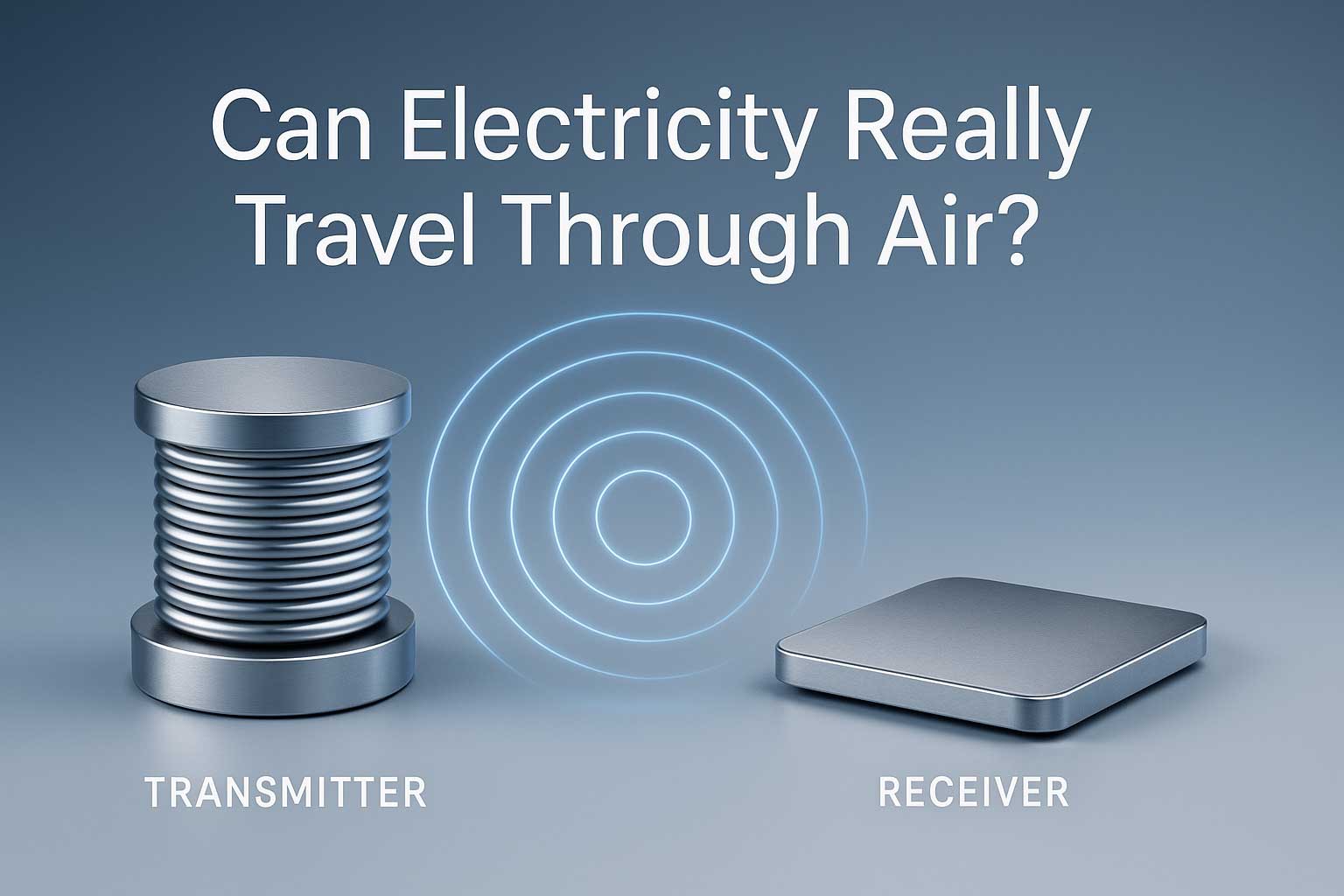
Wireless electricity is the deliberate transfer of power from one point to another. The energy starts at a known source — a charging pad, a resonant transmitter, a laser module or an RF power node — and is sent directly to a device that needs it.
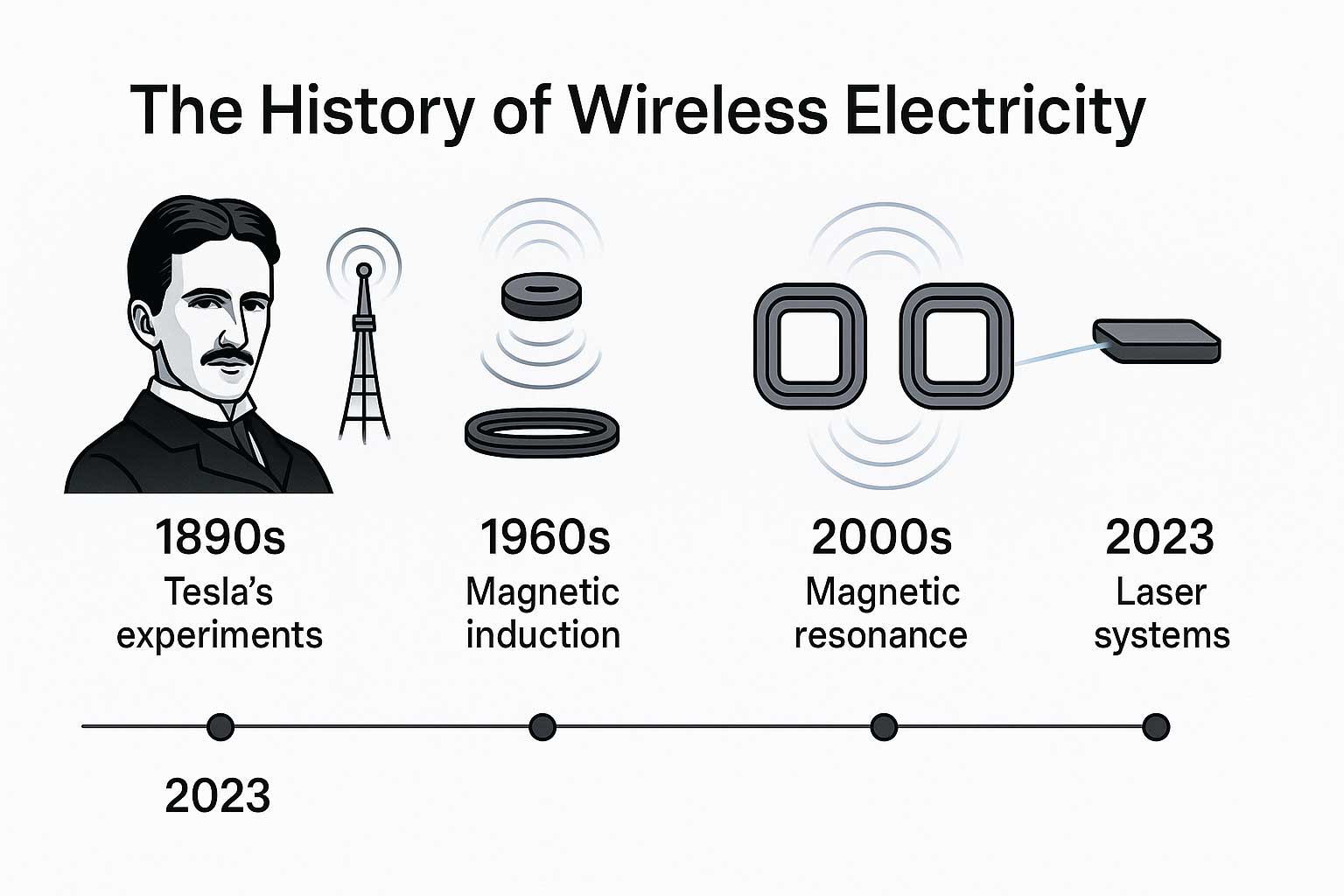
Common methods include:
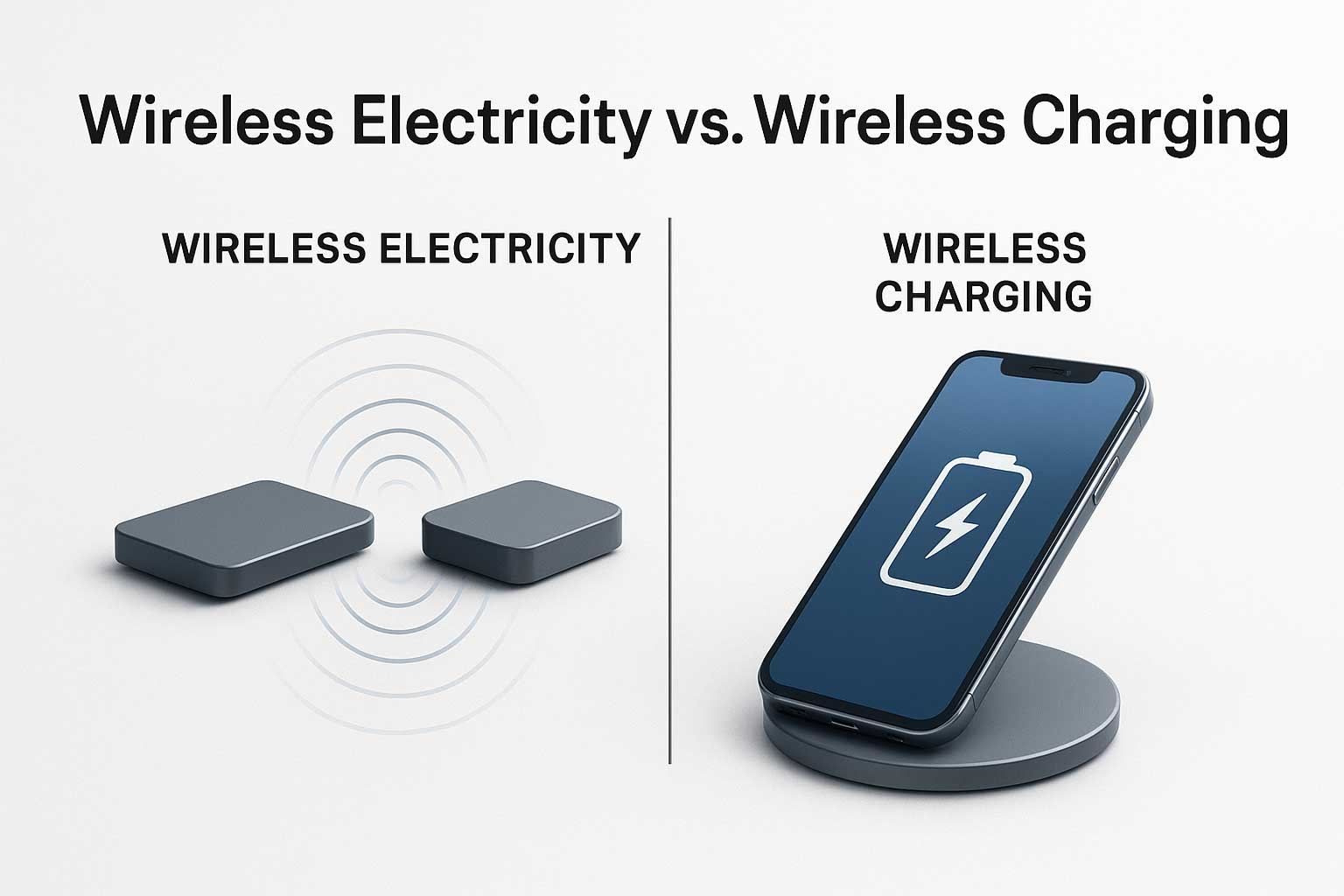
- inductive coupling for short-range charging pads
- magnetic resonance for more flexible mid-range links
- RF power delivery for small sensors and tags
- laser-based systems for isolated or hazardous locations
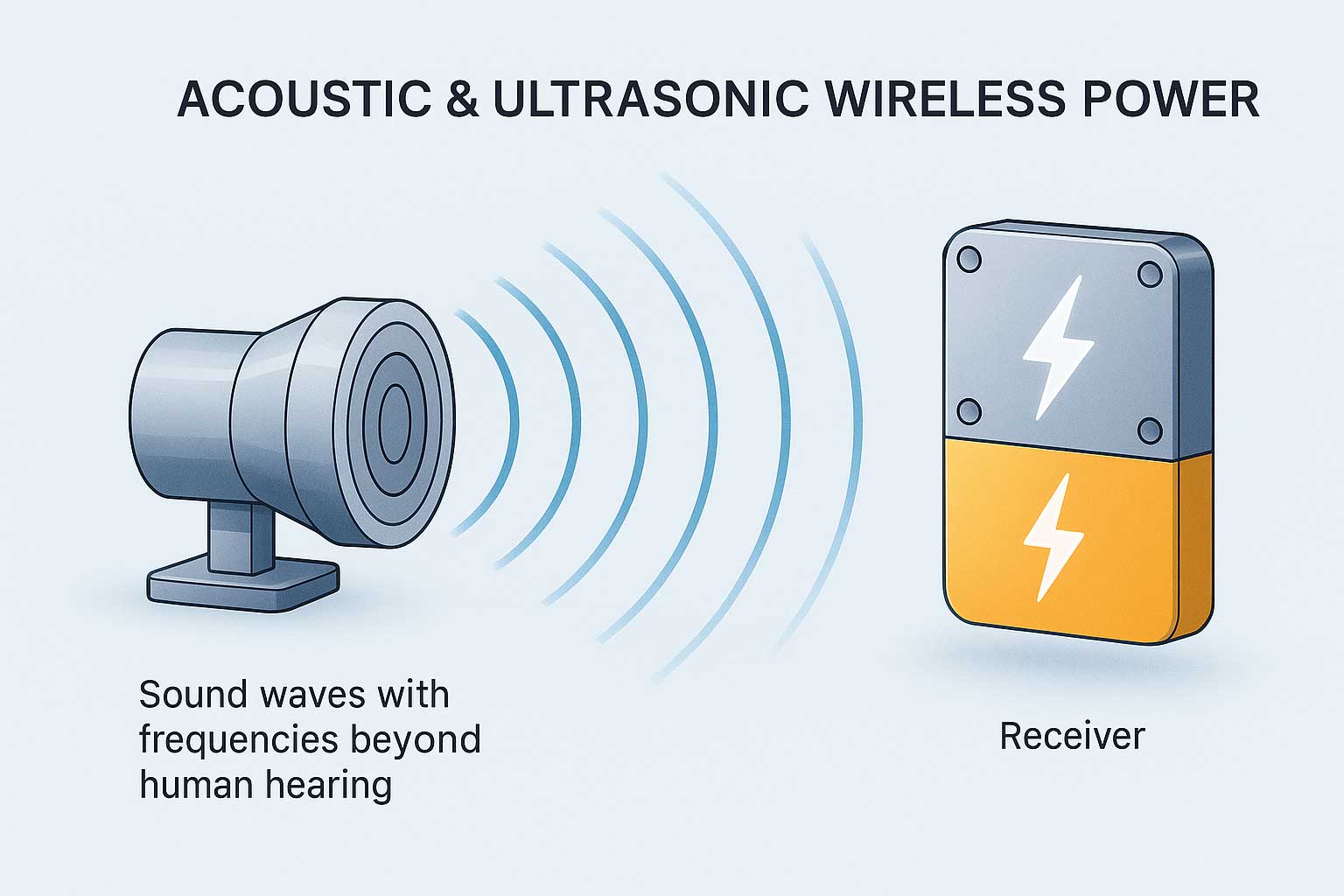
- ultrasonic power for underwater or sealed devices
The defining trait is control. Engineers design the system to deliver power on purpose, along a chosen path.
What Is Energy Harvesting?
Energy harvesting collects small amounts of power from the surrounding environment. Instead of receiving energy from a specific transmitter, a device gathers what is already present. The harvested power is usually low, but it can be enough for sensors, microcontrollers and communication bursts.
Common sources include:
- light — tiny solar cells for indoor or outdoor sensors
- motion or vibration — piezoelectric materials that generate charge when flexed
- heat differences — thermoelectric generators that use temperature gradients
- ambient radio waves — energy scavenged from Wi-Fi, cellular or broadcast signals
Unlike wireless electricity, harvesting doesn’t require infrastructure designed specifically for power delivery.
Where the Confusion Happens
Because both approaches can power small electronics without wires, they often get grouped together. But the difference lies in intent and scale. Wireless electricity provides a defined power link. Energy harvesting collects whatever it can from the environment, often at much lower levels.
For example, a sensor in a factory might use energy harvesting to run a microcontroller but rely on wireless electricity for higher-power tasks like data transmission or active sensing.
Strengths of Wireless Electricity
Wireless power excels when a device needs reliable, predictable energy. It’s useful when batteries would wear out too quickly or when wiring would be difficult, unsafe or expensive.
Advantages include:
- consistent power delivery
- higher available wattage than harvesting can provide
- support for devices that need continuous operation
- stable performance in environments where ambient energy is limited
It becomes especially important in industrial, medical and robotics applications.
Strengths of Energy Harvesting
Energy harvesting shines when devices must operate for long periods with minimal maintenance. Even tiny amounts of energy can keep a sensor alive if its power demands are low enough.
Key benefits include:
- no need for recharge cycles
- extended lifespan for remote or sealed devices
- no dedicated transmitter required
- ideal for distributed IoT systems
Harvesting works well in places where sending wired or wireless power is impractical, such as structural health sensors, environmental monitors and low-energy beacons.
Where They Work Together
Many modern systems combine both methods. A sensor might harvest sunlight or vibration during normal operation, then rely on wireless electricity when it needs extra power for communication or data processing.
Examples include:
- smart building sensors that harvest light but recharge via inductive pads during maintenance
- industrial sensors that scavenge RF power but use wireless electricity for high-demand events
- wearable devices that harvest motion while charging wirelessly at rest
This hybrid approach reduces battery reliance and increases reliability.
The Bottom Line
Wireless electricity and energy harvesting both address the challenge of powering devices without cables, but they do it in different ways. Wireless electricity delivers energy intentionally from a source, supporting higher power levels and continuous operation. Energy harvesting collects small, ambient energy and excels in maintenance-free deployments.
Together, they offer a flexible set of tools for engineers designing the next generation of smart devices, sensors and systems — especially in places where traditional wiring simply doesn’t fit.

onwutc