
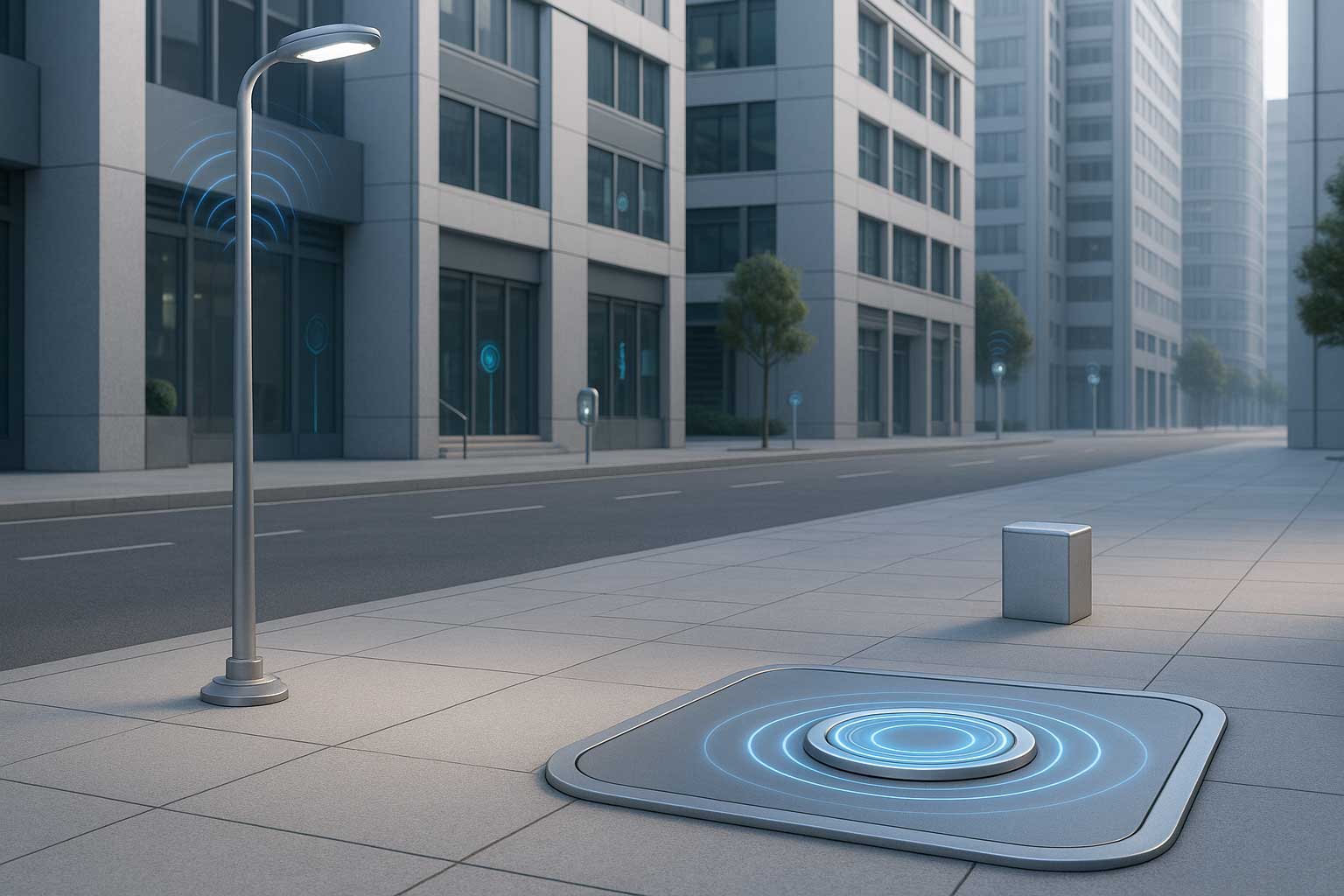
Wireless Electricity in Smart Cities: Powering Infrastructure Without Cables
Smart cities promise cleaner streets, smoother transport and more responsive public services. Behind that vision sits a simple reality: everything in a smart city needs power. Sensors, cameras, displays, traffic systems, meters and communication nodes all depend on a steady energy supply. Traditionally, that has meant miles of cable hidden under roads, in walls or along utility poles. Wireless electricity offers another option — not to replace every wire, but to reduce the need for new ones in key parts of the urban landscape.
When city planners and engineers talk about wireless power, they’re usually not imagining glowing skylines fed by airborne electricity. They’re looking at specific, practical places where getting a cable to the device is hard, disruptive or too expensive. In those situations, wireless power can become just as important as wireless data.
Why Smart Cities Need Wireless Power Options
As more devices are added to city infrastructure, the number of power connection points grows quickly. Every new cable run means permits, trenching, labour and long-term maintenance. For retrofits in older areas, adding wiring can be especially difficult.
Wireless electricity can help by:
- reducing the need to open streets and sidewalks for new conduits
- cutting down on exposed connectors that fail in harsh weather
- enabling devices to be placed in locations that are hard to reach with cable
- making it easier to relocate or upgrade hardware later
The goal isn’t to make the grid disappear, but to make edge devices less tied to fixed wiring.
Street-Level Sensors and IoT Devices
Smart cities rely heavily on small, distributed sensors: air-quality monitors, traffic counters, noise meters, flood detectors and more. Many of these devices sit in awkward spots — on poles, under bridges, near waterways or in existing structures that weren’t designed for extra wiring.
Low-power RF energy transfer and energy harvesting systems can keep some of these sensors running with minimal battery maintenance. In other cases, inductive or resonant pads can provide contactless power to modules mounted on poles or within street furniture, simplifying installation.
Public Displays, Signage and Information Kiosks
Digital signage and information kiosks are now common in transport hubs and city centres. Traditionally, each one requires both a data link and a power line. As wireless data has become standard, power is the last cord keeping these systems tethered.
For small and medium-sized displays, embedded wireless charging surfaces or local resonant systems can reduce visible cabling and wear-prone connectors. In some cases, modular panels can be swapped or relocated without rewiring, because the power is delivered through a hidden interface rather than a plug.
Smart Lighting and Lamp-Post Infrastructure
Streetlights are natural anchor points for smart-city hardware. They already have power and elevated positions, making them ideal hosts for sensors, cameras and communication units. However, tapping into their wiring and adding extra connectors increases complexity and maintenance.
Wireless electricity allows add-on modules to draw power from the lamp post without additional exposed cabling. Magnetic coupling or short-range resonant systems embedded in mounting brackets can power small devices attached to poles, simplifying installation and replacement.
Transport Hubs and Mobility Systems
Bus stops, tram platforms and charging points for shared mobility systems are all key parts of the urban network. They often host real-time information screens, ticket machines and communication equipment. In dense or historic areas, extensive new cabling can be difficult to route cleanly.
In these settings, wireless electricity can:
- power low-demand devices using RF or inductive links integrated into shelter structures
- support short-range charging pads for shared e-scooters or bikes
- reduce wear on connectors exposed to weather and frequent use
The result is less visible clutter and fewer points of failure in highly used spaces.
Underground and Hard-to-Reach Installations
Smart cities also depend on hardware that most people never see: sensors inside storm drains, monitoring equipment in tunnels, instrumentation in culverts or underpasses. Running and maintaining cables in these areas can be dangerous or disruptive.
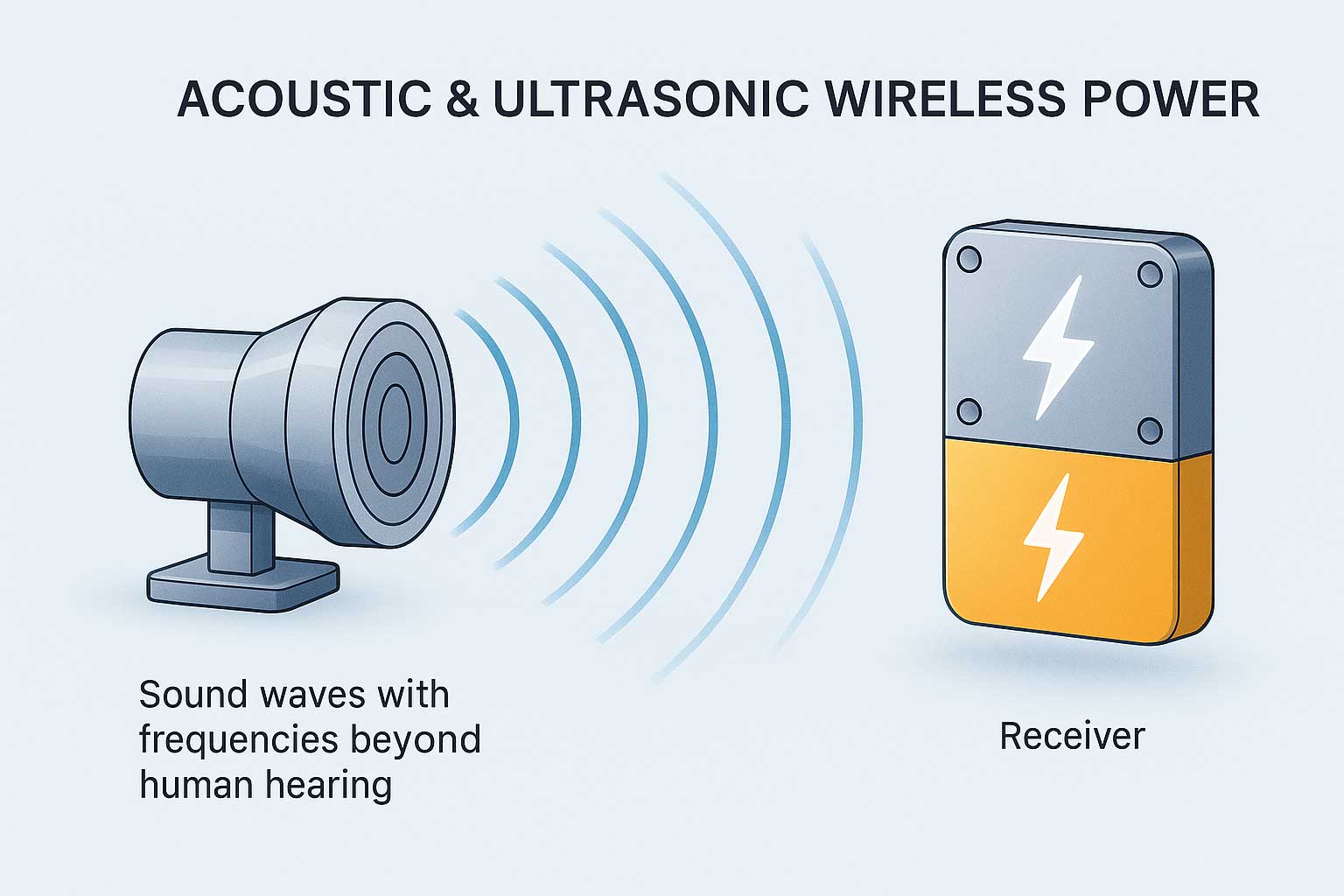
Wireless power systems, including acoustic or inductive links through walls or enclosures, can keep these devices running without frequent access. In some cases, a device can be installed once and left for years, drawing modest power from a contactless interface.
Balancing Wireless Power with Grid Reality
Even in the most advanced smart city, wired infrastructure remains central. Large loads — buildings, transit systems, data centres — still need traditional lines and substations. Wireless electricity plays a complementary role, focusing on the “last metre” rather than the full power path.
The most realistic near-term pattern looks like this:
- the grid brings power to a local hub or pole
- wireless links serve small devices branching off that hub
- batteries, supercapacitors or local storage smooth out demand
In other words, wireless electricity extends the reach of the grid without replacing it.
Design and Safety Considerations
Cities must weigh safety, reliability and interference whenever they adopt new power systems. Wireless electricity solutions for urban use follow established exposure standards, especially for RF and magnetic fields. Laser and ultrasonic systems, where used, are confined to controlled setups with monitoring and automatic shutoff.
Engineers also consider maintenance: how easily devices can be replaced, updated or upgraded without specialist work. Wireless power can simplify this by reducing the number of physical connectors that corrode, break or loosen over time.
The Bottom Line
Wireless electricity in smart cities isn’t about dramatic, cable-free skylines. It’s about quieter improvements: fewer trenches in roads, cleaner installations on poles and walls, and sensors that keep working without constant battery swaps. As urban systems become more connected, these incremental advantages add up.
In the long run, the most successful smart cities will likely mix robust wired infrastructure with carefully chosen wireless power links at the edges — using each where it makes the most sense.

Leave A Comment