
Real-World Applications of Wireless Electricity: Where It’s Actually Used
Wireless electricity is often talked about in terms of future possibilities, but a significant part of it is already here. Quietly, in products and systems that most people don’t think about, power is moving without wires in ways that are practical, safe and commercially useful. The field isn’t about replacing every cable; it’s about solving specific problems where wires make design harder, not easier.
Looking at real applications helps ground the discussion. It shows where wireless power genuinely adds value, and where traditional wiring still makes more sense. The reality is a mix of both: targeted, well-designed systems that fit clear use cases.
Consumer Electronics and Everyday Devices
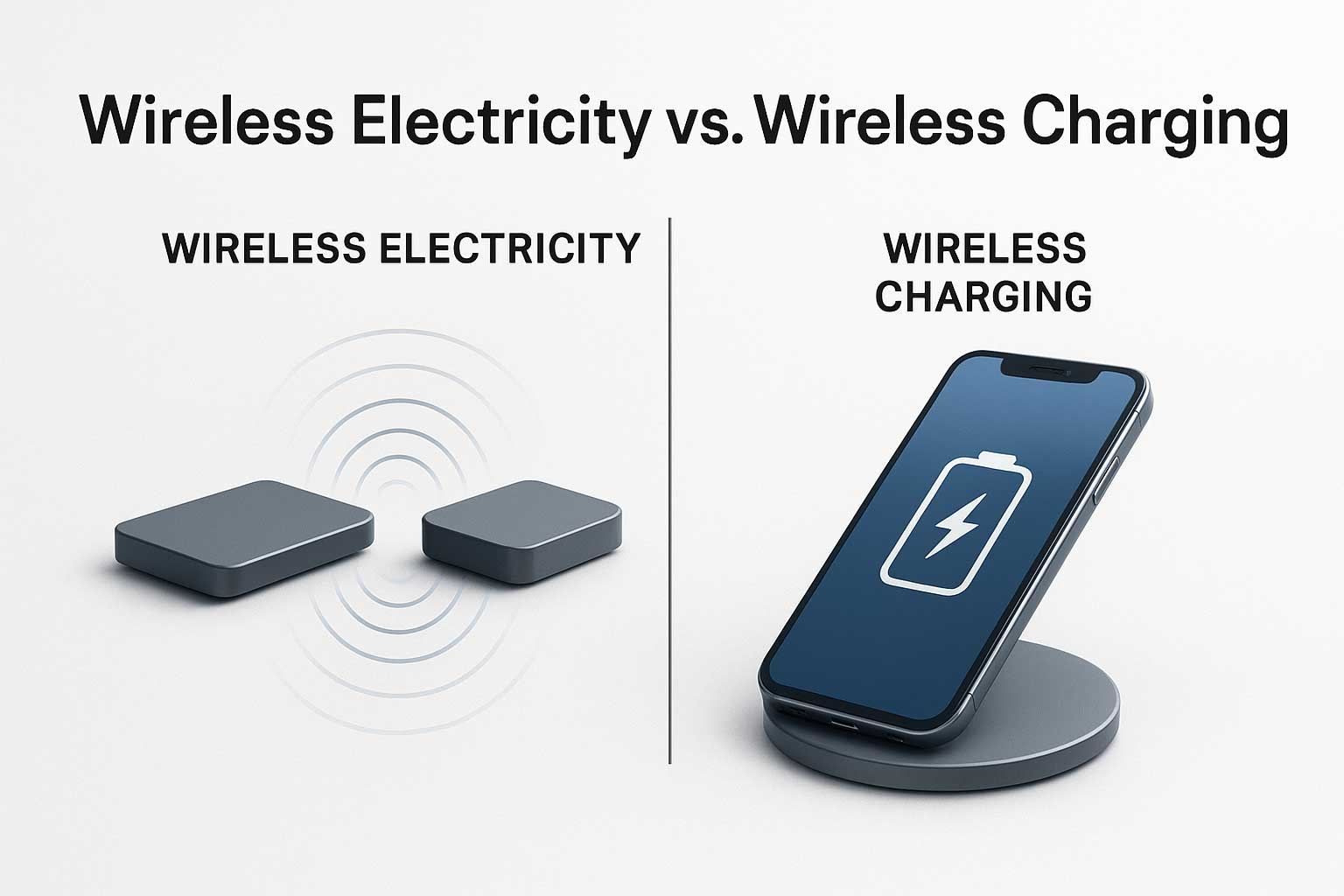
The most visible use of wireless electricity is in consumer electronics. Phone charging pads, smartwatch cradles and wireless earbuds cases all rely on short-range inductive links. These products don’t revolutionise power delivery, but they remove friction from daily routines.
Common benefits include:
- fewer exposed ports to wear out or collect dust
- sealed designs that are more resistant to moisture
- simpler “drop and charge” behaviour instead of plugging in
For users, the technology fades into the background. Devices just charge when placed in the right spot, and the underlying induction coils do their work quietly.
Smartphones, Furniture and Embedded Surfaces
As wireless charging mats become more common, they are starting to be built directly into furniture and shared spaces. Desks, bedside tables and public charging stations can hide transmitter coils under their surfaces, allowing phones and compatible devices to charge without visible hardware.
This is where magnetic resonance and carefully tuned inductive systems overlap. The more forgiving the alignment, the easier it is to embed power into everyday surfaces without forcing users to hunt for exact charging spots.
IoT Devices and Sensor Networks
Wireless electricity becomes more than a convenience when it reaches sensors and small devices scattered across buildings, factories or outdoor installations. Replacing or recharging batteries in these locations can be costly and time-consuming.
RF-based power delivery and energy harvesting allow certain sensors to operate with little or no battery maintenance. These systems are especially useful for:
- temperature and humidity sensors in building management
- occupancy and motion sensors in smart lighting systems
- environmental monitors in industrial or agricultural settings
- asset tracking tags in warehouses and logistics operations
In many cases, RF power isn’t the only source of energy, but it can extend battery life dramatically or eliminate the need for replacement altogether.
Industrial and Hazardous Environments
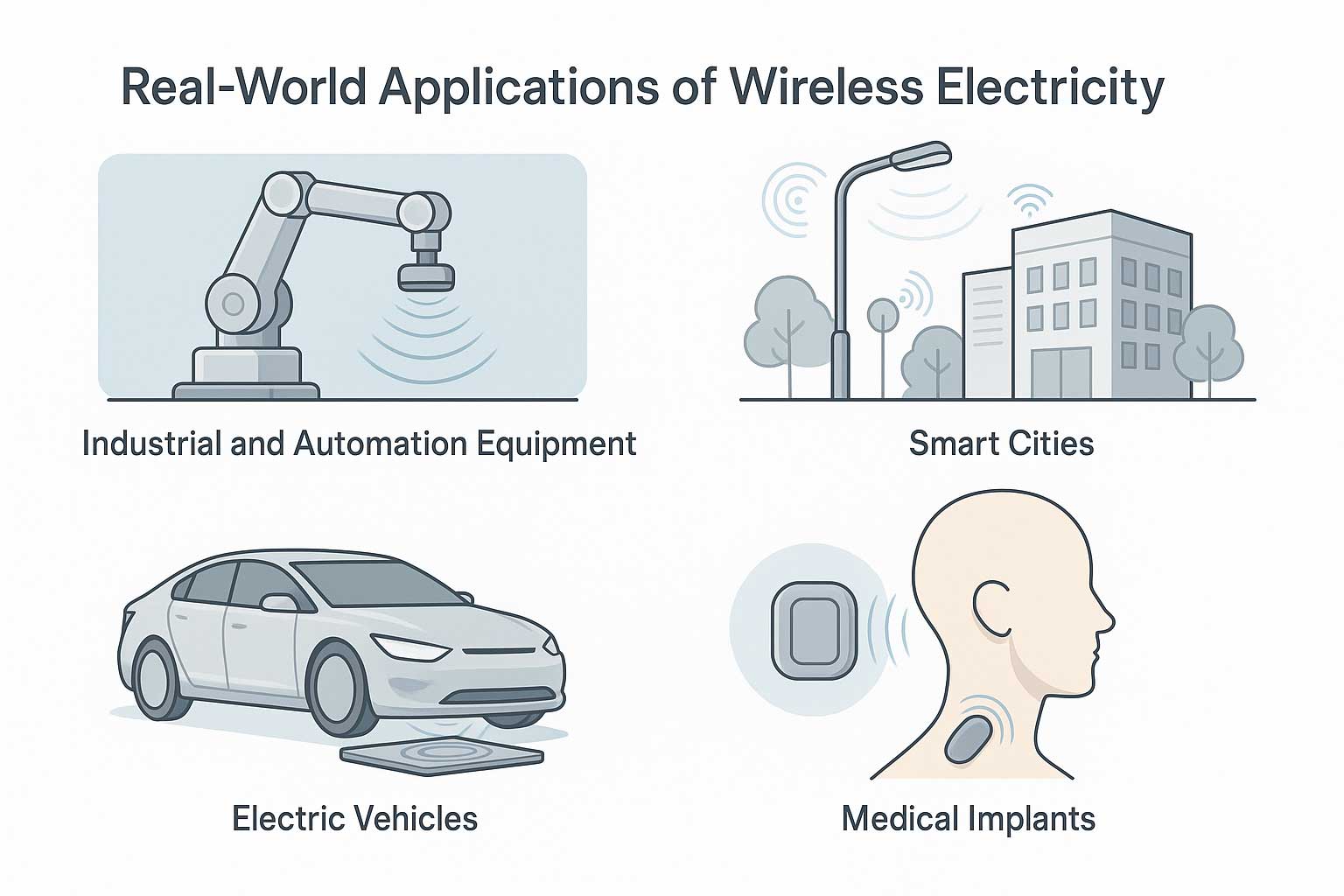
Industrial sites often contain flammable materials, high voltages or corrosive conditions. In these environments, electrical connectors can become weak points. Wireless power links — whether magnetic, optical or acoustic — reduce the number of exposed metal contacts and mechanical joints that can fail.
Examples include:
- contactless power for rotating machinery and robotic joints
- energy delivery to sensors inside sealed tanks or enclosures
- laser-based power across high-voltage zones where cables would be unsafe
Here, the value of wireless electricity isn’t convenience. It’s reliability and safety.
Medical Devices and Implants
Inside the human body, wires are rarely an option, and surgeries to replace batteries carry risk. That makes wireless power especially attractive for medical implants and wearable devices.
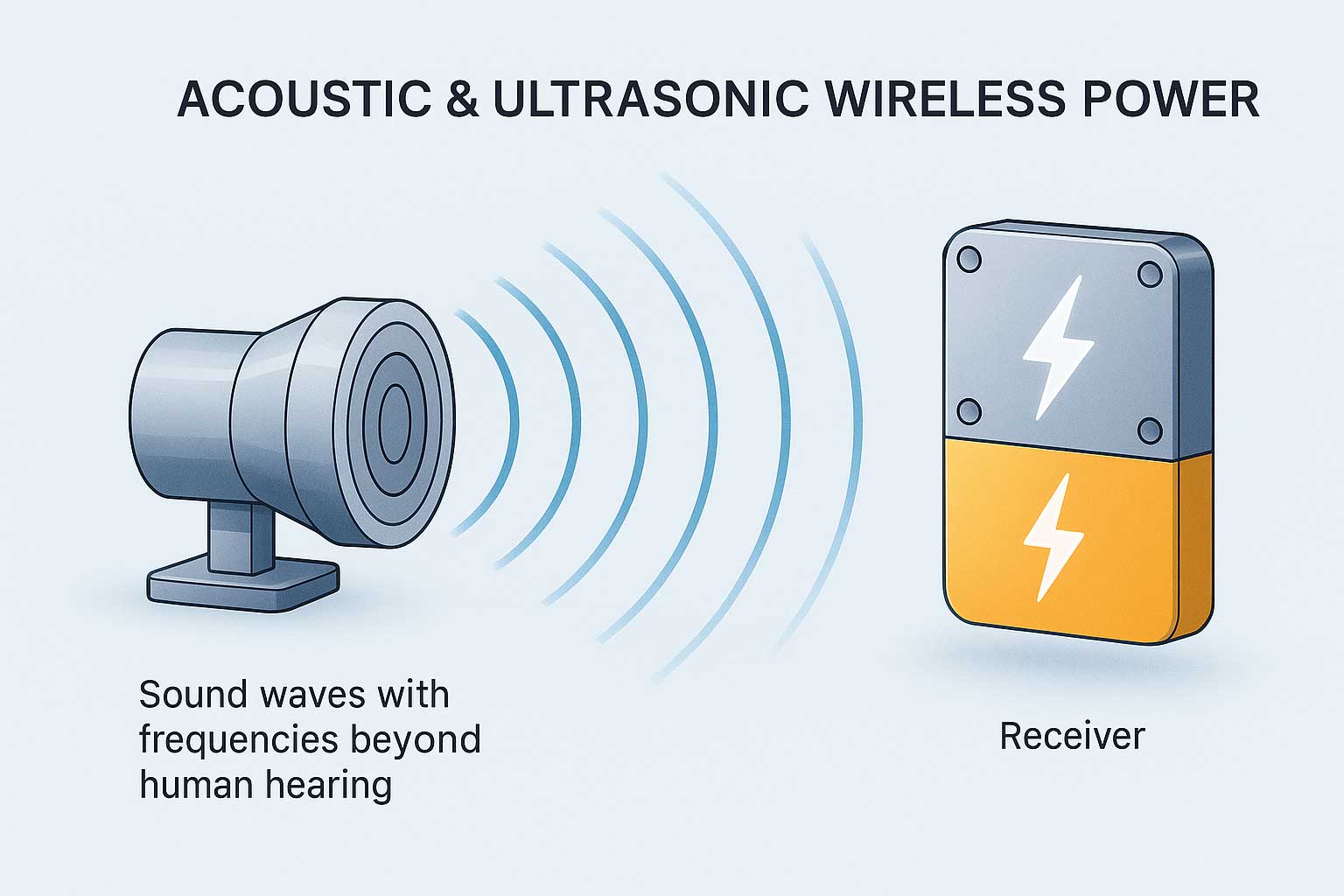
Short-range inductive links can recharge implants that sit just under the skin. Ultrasonic and RF systems are being explored for deeper devices that need power without frequent battery replacement. At the surface, wearables such as patches and monitors can use wireless charging to remain sealed against moisture and contamination.
The common thread is reducing invasiveness. Every avoided battery change is one less procedure, one less opening in the body and one less potential complication.
Robotics, Drones and Automation
Robots and drones are limited by how often they must stop to recharge. Cables can’t easily follow moving arms, autonomous carts or aerial vehicles. Wireless power offers ways to keep them running longer with less manual intervention.
Practical examples include:
- charging pads embedded in warehouse floors for mobile robots
- inductive or resonant zones where automated guided vehicles pause briefly to top up
- experimental laser links that deliver power to drones in controlled settings
In these cases, even small improvements in uptime can add up across a fleet.
Electric Vehicles and Transport
Wireless charging for electric vehicles is still emerging, but it is already being tested in pilot deployments. Pads embedded in parking spots or garage floors can charge vehicles without plugging in. Some research projects explore dynamic charging — delivering power to vehicles as they move along specially-equipped road segments.
Static wireless charging simplifies daily routines. Dynamic systems remain experimental, facing challenges in standardisation, cost and infrastructure complexity. The most realistic near-term growth is in fixed pads for cars, buses and delivery vehicles that follow predictable routes.
Smart Buildings and Infrastructure
As buildings become more instrumented, wireless power helps reduce the visual and physical clutter of cables. Ceiling-mounted transmitters can feed small sensors, signage and low-power control units without direct wiring.
Combined with energy harvesting from light or vibration, these wireless links contribute to maintenance-free devices that can stay in place for years without service. For large facilities, that reduction in manual upkeep is significant.
Limitations That Still Shape Real Deployments
Despite the variety of uses, wireless electricity is not a universal solution. Every deployment is shaped by the same constraints:
- range — most systems stay within short or modest distances
- power level — higher power means tighter safety and efficiency requirements
- alignment and environment — beams and fields must be managed around obstacles and interference
- cost — wiring is still cheaper for many high-power, fixed installations
These factors ensure that cables remain central to large-scale infrastructure, even as wireless power grows in specialised roles.
Near-Future Expansion Areas
Looking ahead, the most likely growth areas are not dramatic, city-wide wireless grids, but quieter upgrades to existing systems:
- more furniture and public spaces with embedded charging surfaces
- denser IoT deployments powered by RF and energy harvesting
- expanded use of contactless power in factories and warehouses
- refined medical and wearable devices that rely on wireless links instead of ports
In each case, wireless electricity acts as an enabler — a way to simplify design, cut maintenance or improve safety.
The Bottom Line
Wireless electricity is already at work in homes, hospitals, factories and infrastructure. It doesn’t replace wires so much as complement them, taking over where cables introduce friction or risk. The most interesting changes are often the least visible: sealed sensors that never need new batteries, machines with fewer wear points, implants that stay powered without repeated surgery.
As the technology matures, more of the world’s “hidden” power connections will quietly go wireless, not as a headline-grabbing revolution, but as a series of practical decisions where the benefits clearly justify the change.

Leave A Comment