
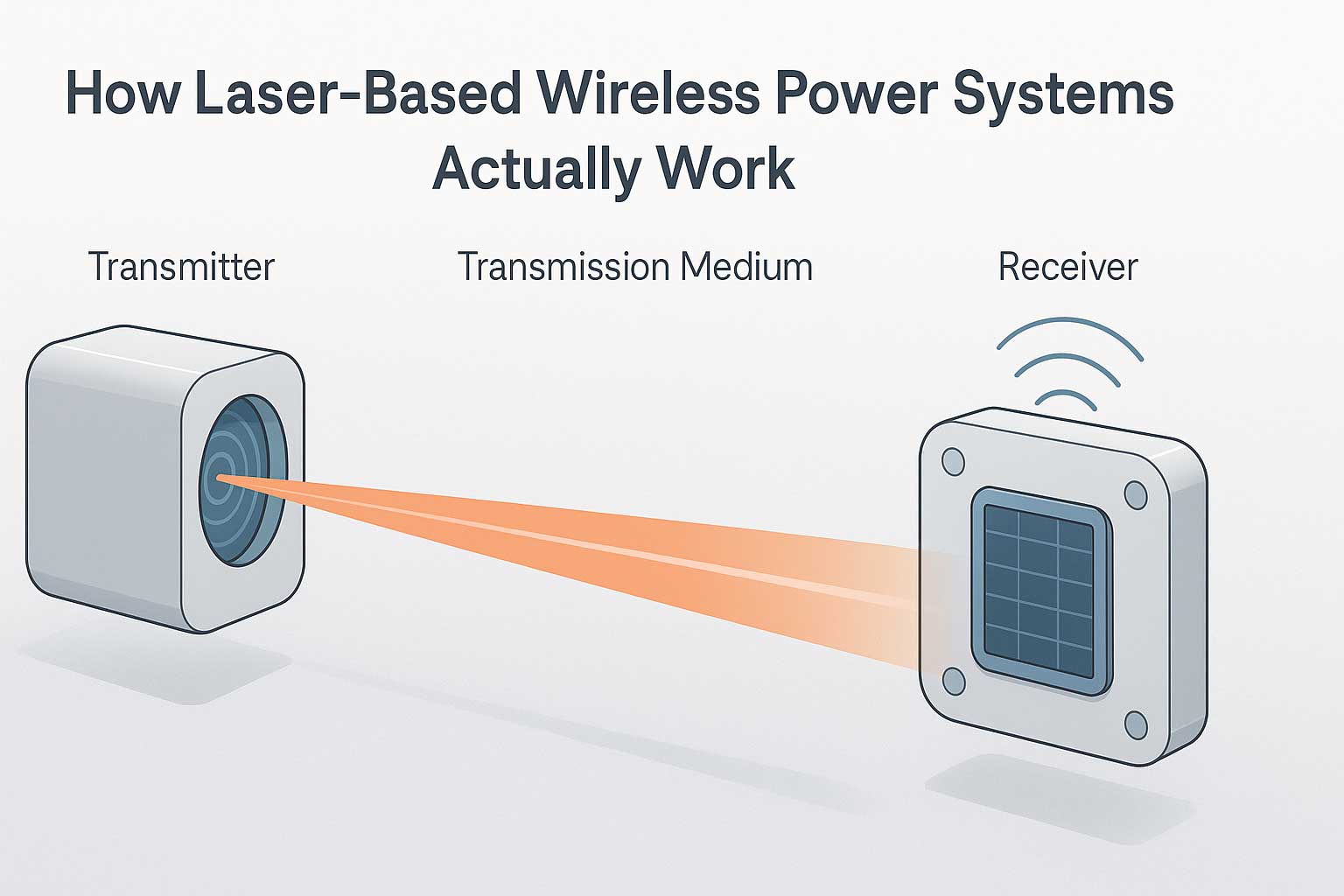
How Laser-Based Wireless Power Systems Actually Work
Laser-based wireless electricity can sound like something pulled from science fiction, but the underlying idea is surprisingly straightforward. Instead of pushing electrons through a metal wire, a power source converts electricity into a concentrated beam of light. That beam travels through air and is captured by a receiver, which turns the light back into electrical energy. The process might seem exotic, but the science behind it is rooted in well-understood optical and photovoltaic engineering.
What makes laser power interesting is not just the method, but the problems it solves. Cables don’t work in every environment, and some equipment benefits from complete electrical isolation. That opens the door for systems that rely on clean, tightly-directed beams of light to deliver energy where wires fall short.
The Basic Components
A laser-based wireless power link involves two main parts: a transmitter and a receiver. On the transmitting side, electricity feeds into a high-efficiency diode laser. These lasers produce a stable, narrow beam of light at a specific wavelength. The beam is aimed at a small photovoltaic panel designed to match that wavelength. When the panel absorbs the light, it generates electrical power, completing the energy transfer.
The core idea is simple — treat a laser as a perfectly targeted delivery mechanism and a photovoltaic cell as the energy-harvesting endpoint. The more precisely the system is tuned, the better the conversion efficiency.
Why Use Lasers Instead of Wires?
For many applications, a cable is still the easiest solution. But in situations where electrical contact isn’t safe or practical, lasers provide a clean alternative. Because the transmitting laser and the receiving panel never touch, the system offers full galvanic isolation. That makes it useful in environments involving high voltage, hazardous chemicals, or sensitive instrumentation.
Engineers also turn to laser power when equipment needs to move freely. Robotic arms, rotating machinery and remote monitoring devices can operate without being limited by cables. The power link remains steady as long as the beam stays aligned.
How Efficient Is the Process?
Efficiency depends on the quality of the laser, the alignment of the system and the design of the optical receiver. In controlled conditions, modern laser power links can achieve impressive transfer efficiency across short distances. The farther the beam travels, the more precision matters. Lens systems and beam stabilisation methods help maintain output, especially in industrial setups.
The energy conversion isn’t perfect, but the reliability and isolation benefits often outweigh the losses. For certain tasks, efficiency is important — but not as important as safety or the ability to operate equipment remotely without wires.
Where Laser Power Is Being Used Today
Laser-based wireless electricity is already gaining traction in specialised fields. Industrial facilities use it to power sensors and devices inside sealed or hazardous enclosures. Research groups are testing it for powering drones and small robots, allowing them to operate without heavy onboard batteries. In environments where electrical contact could create sparks or cross-interference, laser systems provide a controlled alternative.
The approach is also being explored for long-range transmission in niche scenarios, though these projects are still experimental. The technology shows promise, but the focus remains on safe, moderate-distance power links rather than dramatic long-range energy beams.
The Practical Limits
Laser power isn’t designed to replace electrical grids or household wiring. The systems work best when paired with specific engineering needs — isolated circuits, moving parts, sealed environments or remote devices that require targeted power delivery. Weather can disrupt outdoor beams, and safety protocols must ensure that no one accidentally crosses an active line of transmission.
Because the method is so directional, it excels in controlled settings more than open, unpredictable ones. It’s not a universal solution, but a specialised tool that fills gaps traditional wiring can’t handle.
The Bottom Line
Laser-based wireless electricity takes a familiar idea — converting light into power — and applies it in a precise, engineered way. Instead of replacing everyday wires, it steps in where physical connections introduce risk or mechanical limitations. The systems are still evolving, but their applications are growing, especially in industries that value isolation, accuracy and design freedom.

Leave A Comment