
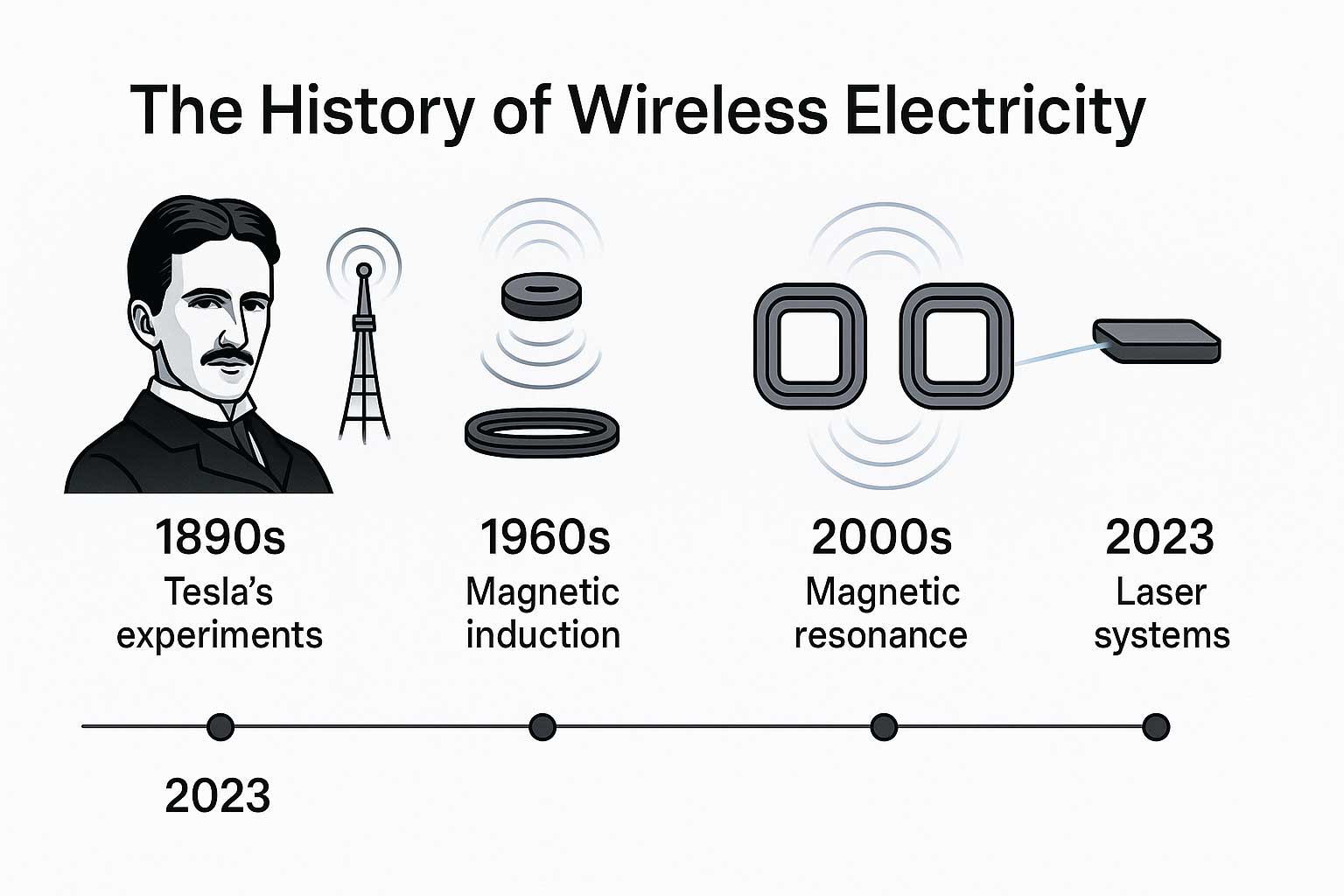
The History of Wireless Electricity: From Tesla to Modern Power Systems
Wireless electricity often feels like a modern breakthrough, but the idea has roots that reach back more than a century. Long before smartphones charged on pads and sensors gathered energy from radio waves, researchers were experimenting with ways to send power through the air. The tools and science have changed dramatically, but the curiosity driving the field has stayed the same.
The story of wireless electricity is part science, part engineering and part persistence. Each generation added something new — a better understanding of fields, improved materials, safer designs — until the technology slowly shifted from bold ideas to practical systems.
Tesla’s Early Experiments
Nikola Tesla remains the most recognised figure connected to wireless power. In the late 1800s and early 1900s, he explored high-frequency resonant systems and experimented with large coils capable of transmitting energy wirelessly over impressive distances. Much of his work was ahead of its time, and the technology needed to control it safely didn’t yet exist.
His most famous project, the Wardenclyffe Tower, aimed to transmit both information and power across long ranges. Funding issues and engineering limits prevented the system from being completed, but the concept left a lasting impression. Tesla demonstrated that power could move through air using electromagnetic fields — even if the world wasn’t ready to harness it yet.
The Shift Toward Practicality
After Tesla’s era, interest in wireless electricity never disappeared, but it moved toward smaller, more pragmatic goals. Instead of lighting up entire towns, researchers focused on transferring modest amounts of power safely and efficiently.
During the mid-20th century, scientists explored microwave-based power beaming, especially in aerospace projects. One famous demonstration involved sending energy via microwaves to a remote helicopter, keeping it airborne using nothing but wireless power. It proved the concept, but the hardware was bulky and expensive.
The Rise of Short-Range Wireless Charging
In the early 2000s, wireless power took a more consumer-friendly direction. Advances in magnetic and resonant coupling led to the first practical short-range charging systems — the technology behind today’s smartphone charging pads and electric toothbrush docks.
These systems didn’t promise long-distance transmission. Instead, they focused on reliability, safety and convenience. Their success brought wireless electricity into homes and shifted public perception. Power didn’t have to be delivered through a cable; a field could do the job quietly.
Modern Research: A Diverse Set of Methods
Today, wireless electricity is no longer a single idea. It’s a collection of different methods designed for different purposes. Each one builds on decades of scientific progress:
- Magnetic induction for close-range charging pads.
- Magnetic resonance for mid-range energy transfer.
- RF power delivery for low-power sensors and IoT devices.
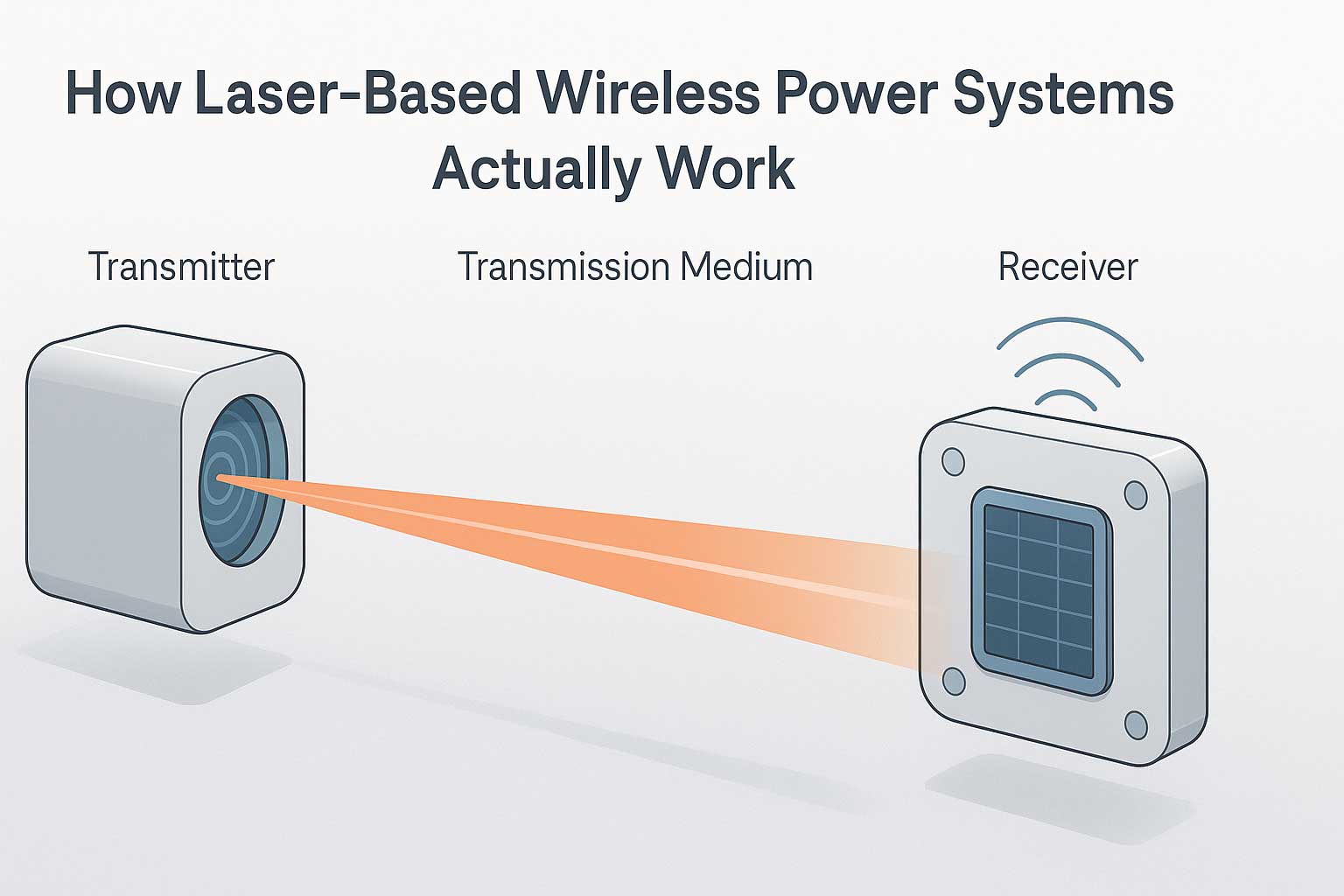
- Laser-based power for isolated or hazardous environments.
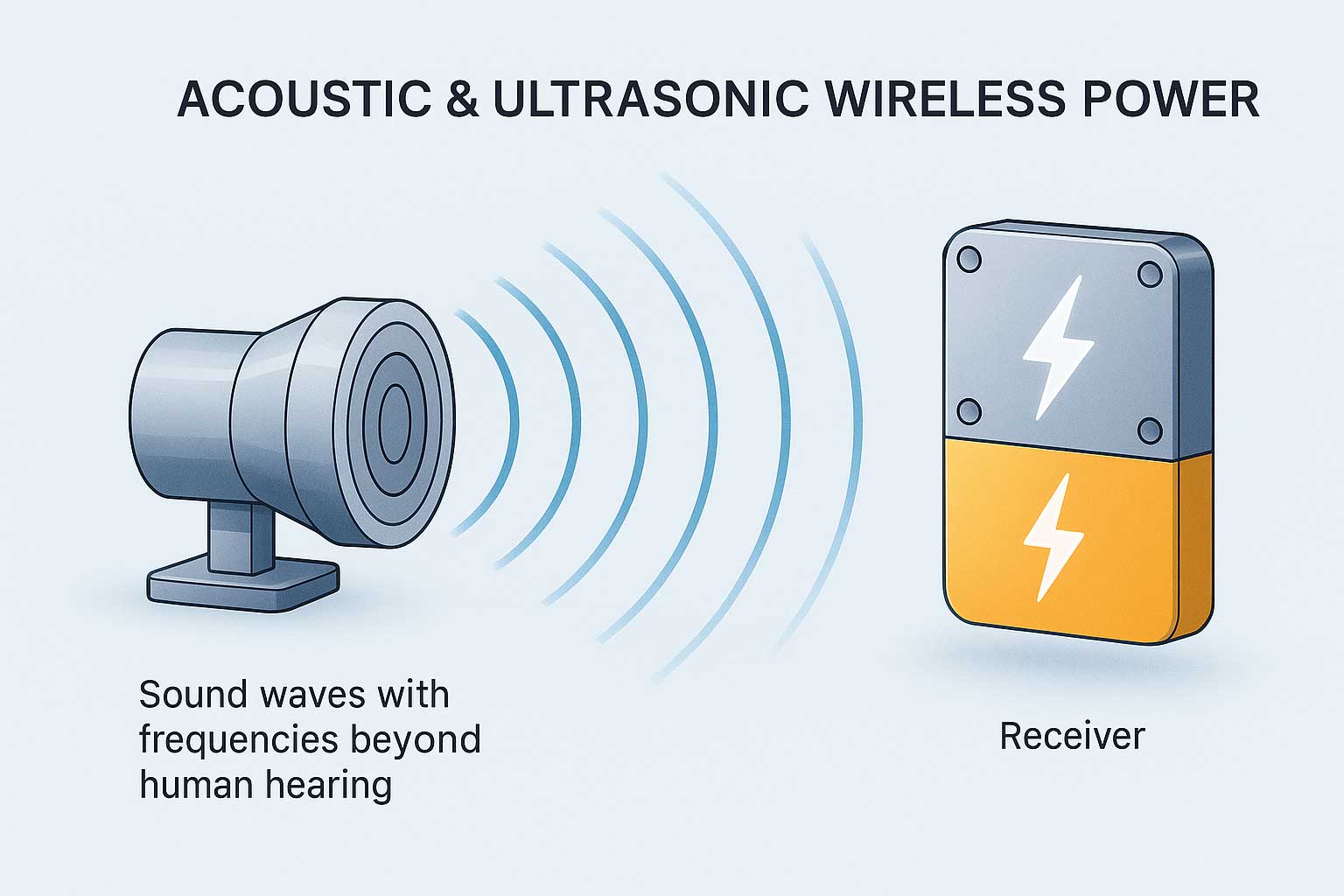
- Ultrasonic systems for underwater and medical applications.
Unlike Tesla’s single sweeping vision, the modern landscape is specialised. Engineers choose the method that best fits the problem rather than trying to solve everything at once.
The Return of Long-Range Experiments
Even with all the practical systems available, researchers haven’t abandoned the idea of long-range power. New materials, safer designs and better control systems have made high-distance experiments more realistic than they were a century ago.
Countries like Japan, the United States and Finland have demonstrated prototype systems capable of delivering power across meaningful distances using microwaves or lasers — not for everyday consumer use, but for space applications, remote sensors and specialised industrial work.
These projects aren’t trying to recreate Tesla’s tower. They’re exploring how far modern technology can go without compromising safety or efficiency.
What Hasn’t Changed
Despite all the progress, one theme runs through every era of wireless electricity: the goal of removing physical constraints. Whether it was Tesla trying to eliminate wires from communication, or today’s engineers powering sealed sensors and mobile robots, the motivation is the same — making electricity easier to deliver where wires fail or complicate design.
The Bottom Line
The history of wireless electricity is a long arc of ambition meeting engineering reality. From Tesla’s grand experiments to modern RF, laser and magnetic systems, each chapter added knowledge that shapes today’s technology. Wireless power is no longer a dream or a spectacle. It’s a practical field built on decades of careful progress, ready to expand wherever wires fall short.

jamrwp