
Is Wireless Electricity Safe? What Science Actually Says
Any technology that sends power through the air instead of a wire immediately raises one question: is it safe? It’s a reasonable concern. Electricity has always been something we respect, avoid touching and keep contained inside insulation. Letting it move without a physical barrier can feel unsettling if you don’t know the limits or the physics behind it.
The truth is simpler than the fear. Wireless electricity isn’t a single technology. It’s a mix of different approaches — magnetic, optical, radio and acoustic — each with its own safety rules and design limits. Understanding those differences is the key to knowing what is safe, what isn’t and what needs more research.
Why Safety Depends on the Method, Not the Idea
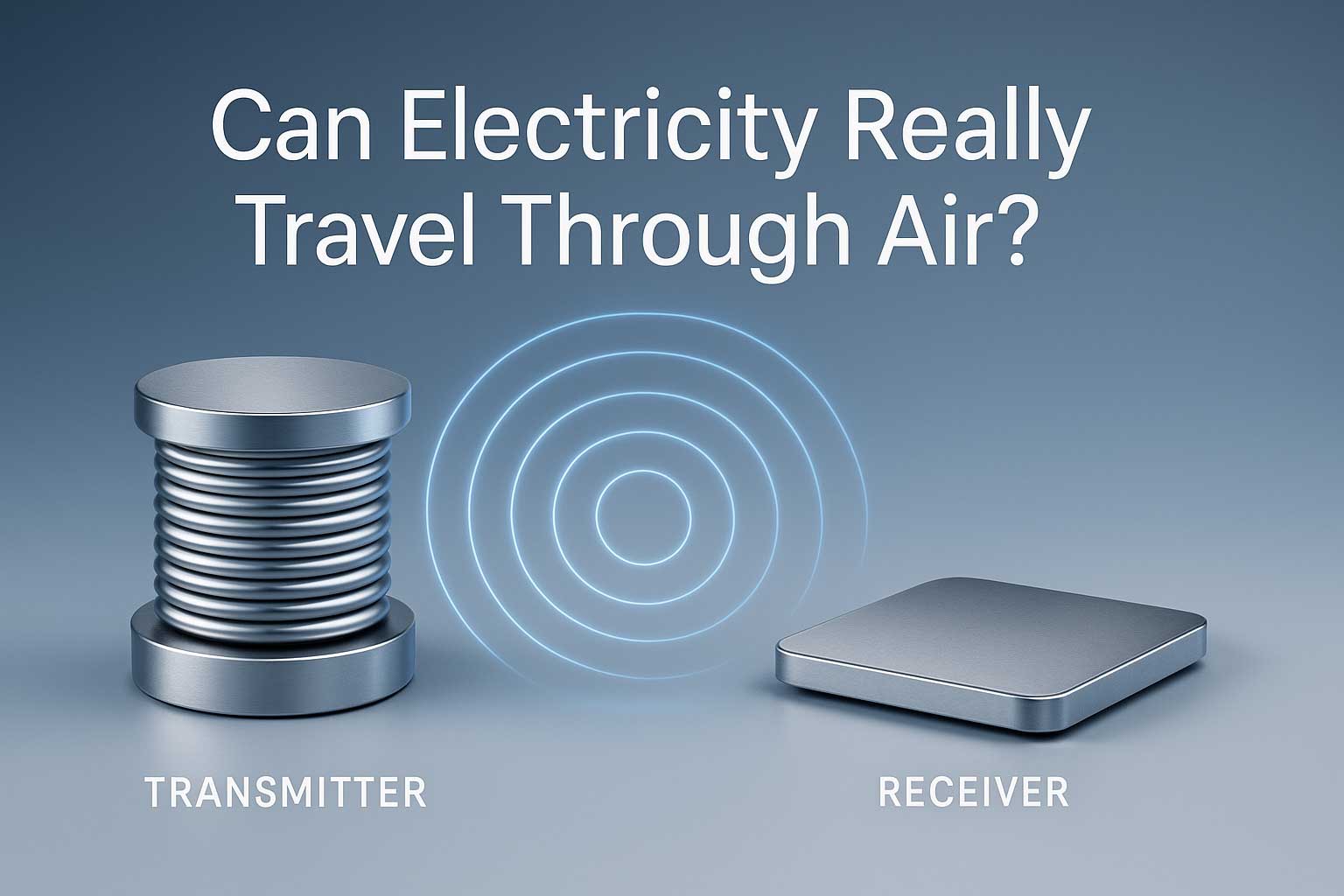
Wires keep electricity controlled because electrons stay inside metal. Once you remove the wire, the energy must be carried by fields or waves that can pass through space. That sounds risky until you realise those same fields and waves already surround us today.
Examples:
- Radio waves from phones and Wi-Fi
- Magnetic fields from household appliances
- Infrared light from remotes and sensors
- High-frequency fields inside induction cooktops
Wireless electricity simply uses these familiar tools in a controlled, measurable way. The question becomes: how strong are the fields, how focused are they and how close do you need to be?
Short-Range Magnetic Systems: Mostly Harmless
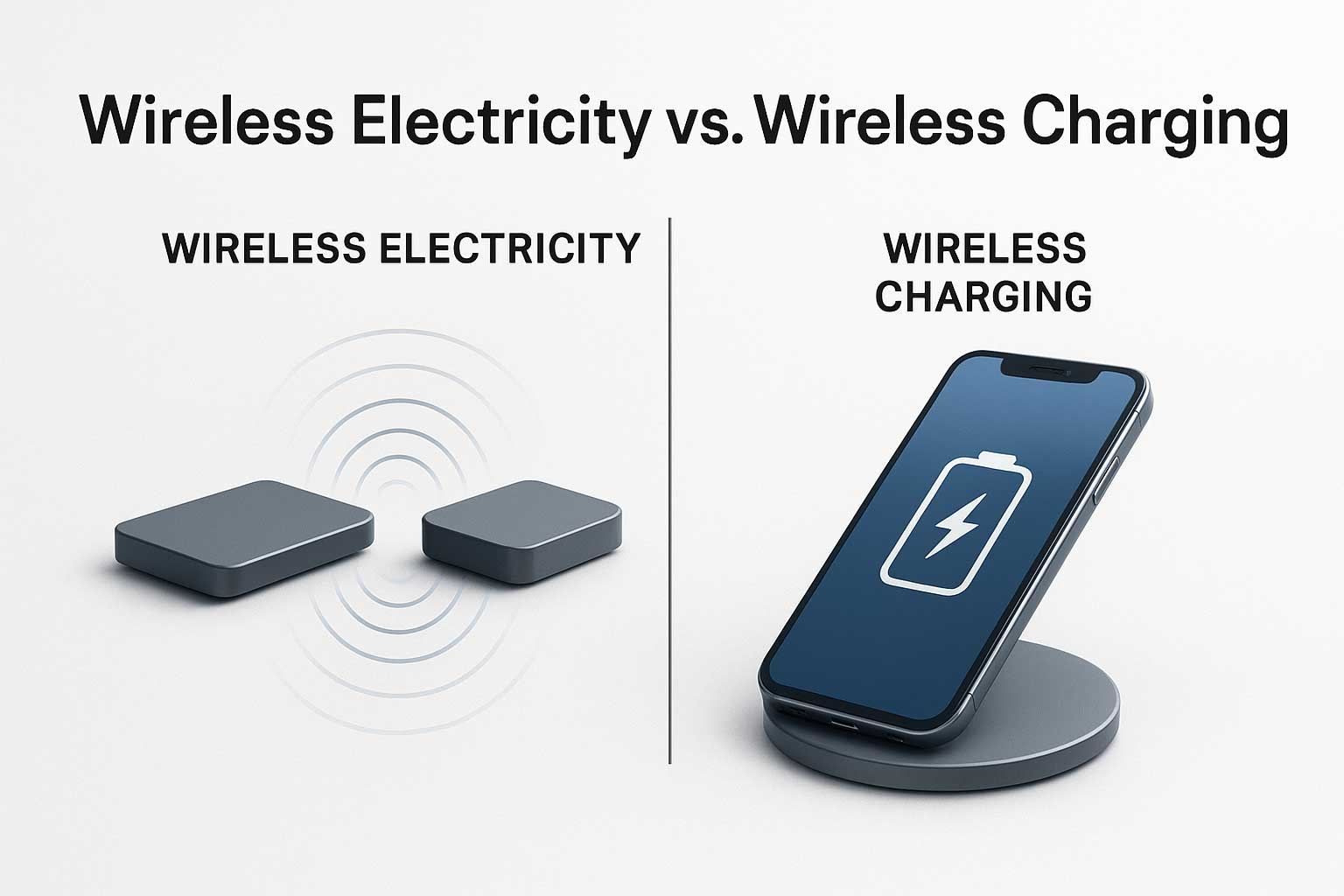
This category includes wireless charging pads and resonant systems used for phones, toothbrushes and some robots. The magnetic fields involved are strong enough to move energy between coils but weak enough that they do not propagate far.
Two main safety points stand out:
- The fields drop off quickly with distance — a few centimetres of separation dramatically lowers exposure.
- The operating frequencies are low enough that they do not ionise tissue or damage cells.
As a result, these systems are considered safe for everyday use and regulated under familiar electromagnetic standards.
RF Power: Low Risk at Low Power
Radio-frequency wireless power shares territory with Wi-Fi, Bluetooth and cellular networks. The safety rules are mature, and engineers know how to ensure that broadcast power stays under established exposure limits.
The limitation is built in: RF systems must stay low power to remain safe. That’s why they work best for sensors and small devices that need milliwatts, not laptops or household appliances.
As long as the transmitted power stays within the regulated range — which is enforced by hardware and firmware — RF systems pose little risk.
Laser and “Power-by-Light” Systems: High Precision, High Responsibility
Delivering power with a beam of light requires careful engineering. A laser strong enough to charge a device can also cause eye damage if not properly controlled. Because of that, modern laser-based systems include:
- Automatic shutoff when the beam is interrupted
- Beam-shape monitoring and alignment checks
- Use of wavelengths that minimise retinal risk
- Enclosures or dedicated optical paths in critical facilities
When designed well and used in controlled environments, laser power links are safe and extremely useful. They are especially valued in high-voltage areas where a physical wire would be more dangerous than a beam.
Ultrasonic and Experimental Methods: Too Early for Firm Conclusions
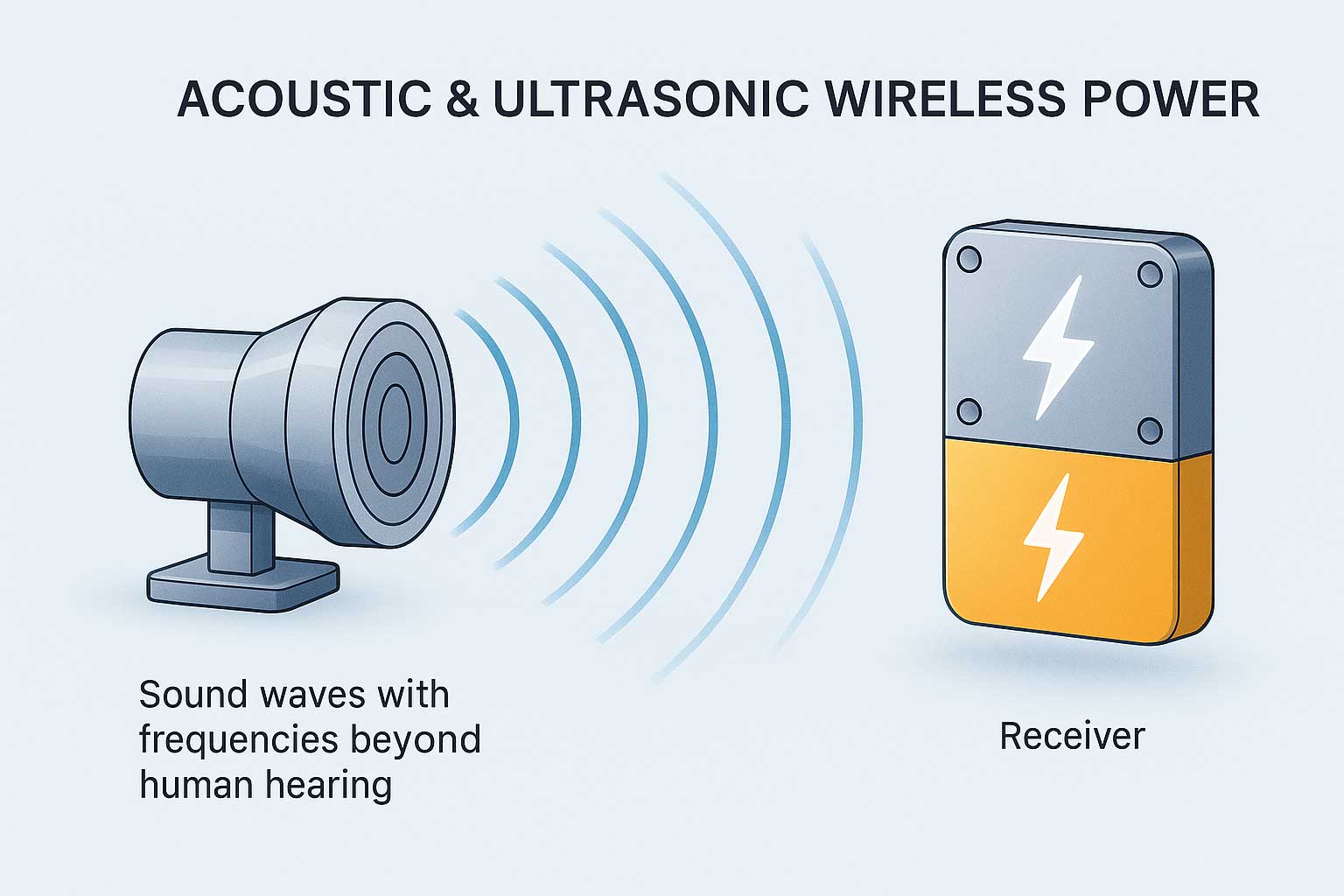
Research groups exploring acoustic pathways and guided electric discharges are still working through the fundamentals. These systems don’t have decades of safety standards behind them, and their behaviour depends heavily on the environment.
For now, they remain strictly experimental. The goal is to understand how to guide energy safely and predictably. Until that work is done, these approaches belong in controlled lab settings, not consumer products.
“Airborne Electricity” Myths and Misunderstandings
Every time wireless power appears in the news, social media fills with dramatic predictions — both optimistic and fearful. Two misconceptions come up repeatedly:
- Myth: Electricity will fill the air like radiation.
Reality: All practical systems use directed or short-range fields, not whole-room flooding. - Myth: Wireless electricity can shock people from a distance.
Reality: The energy densities involved in consumer systems are far below shock thresholds.
Most misunderstandings come from mixing up high-power fantasy with low-power reality.
What Scientists Look At When Evaluating Safety
Safety evaluations generally focus on four questions:
- How strong are the fields, waves or beams?
- How quickly do they weaken with distance?
- What tissues or materials could they interact with?
- How does exposure compare to existing standards?
Whether it is a magnetic charging pad or a laser link in an industrial plant, the same principles apply: measure exposure, understand limits, build systems that cannot exceed them.
Real-World Summary: Safe When Designed Correctly
The safety of wireless electricity depends entirely on the method and the power level. Magnetic charging pads are routine and safe. RF systems are safe within their regulated limits. Laser systems are safe with proper shutoff mechanisms and controlled environments. Acoustic systems are still too new for broad conclusions.
In other words: wireless power isn’t inherently dangerous. Poor design is. Follow the standards and the engineering, and the risks become manageable and predictable.
As the field grows, the technology will continue to be shaped by the same forces that guide everything else in engineering — physics, regulation, real-world data and common sense.

Leave A Comment